What is Functional Connectivity and why is it important?
The human brain’s relationship with stories is as long as humans’ relationship with fire. Sunlit conversations addressed practicalities or gossip, but fireside tales evoked the imagination, preserved history, settled disputes and established social customs. Stories can be described as narratives about human (or human like) agents, their relationships and their fortunes; they are “created for the purpose of engaging readers”. Le Guin describes stories as carrier bags for memories (1997), and indigenous Australians created multidimensional stories called songlines that encompassed knowledge, history and social mores that have endured for tens of thousands of years.
Narrative comprehension takes place in the Default Mode Network (DMN), an interconnected network of brain regions active when our brain is at rest. DMN is most active during REM sleep, mind wandering and reading. However during this time it also monitors and interprets sensory information from external and internal environments including pain.
Neuroscience has linked the DMN with recollection and prediction, thoughts about others, creativity, imagination and impulse, navigation and spatial cognition, emotional responses, and aesthetic experiences.
But stories are much more than entertaining storage devices. Neuroscience is now finding that reading stories increases functional connectivity (FC) between the DMN, the Salience network (SN) and the Central Executive Network (CEN). FC describes the likelihood that these different regions of the brain will become active at the same time. The DMN is responsible for random, creative, diverse and often disconnected thoughts, as well as interpreting external and internal stimuli; the SN determines which thoughts and stimuli are likely to be relevant and meaningful and therefore productive and useful; while the CEN, maintains working memory, and is responsible for controlling attention, logical judgment, and decision-making.
Not only are high levels of FC is linked to creativity, decision making, divergent thinking, concept development and academic performance and even healthy aging, but increased FC is also linked with higher levels of resilience and wellbeing in young people.
Neuroscience is providing empirical evidence from around the globe linking stories to Functional connectivity. Functional connectivity underpins self-actualisation, wellbeing, healthy aging and social adaptation. Yet many countries are diverting funds from qualified school library staff and story based resources. How can educators let this continue?
Since humans harnessed fire to extend their day beyond sundown, Stories have been shared – to explain the world, to calm our fears, to preserve ancient wisdom & to prepare us for the future.
Adolescence: A Window of Opportunity
Adolescence spans the ages from 10 to 19 and is a period of physical, cognitive and psychosocial growth marking the transition from childhood to adulthood. During adolescence peer relationships and large social groups replace adult guidance, influencing self-evaluation as teens seek their personal identity. Social skills including Theory of Mind (ToM) – imagining the world from another’s perspective – emerge in early childhood and continue to develop during adolescence alongside enhanced sensitivity to social signals, motivating behavioural choices; this is a time when teens, viewing themselves from others’ perspectives, choose to abandon performing arts and sports activities. The behavioural and emotional patterns associated with establishing personal identity can result in maladaptive responses and negative spirals during adolescence that can have lifelong effects.
The incidence of mental illness emerging during adolescence appears to be increasing in Australia and abroad. In Australia, 25% of mental illness originates during adolescence with greater numbers of teens reporting concerns about the environment, problems at school or stress, anxiety, depression and self-esteem compared to earlier surveys; in UK 16 year olds as a group record the lowest self-reported scores amongst children on life satisfaction, self-belief, and coping skills; and in USA 76% of teens regard anxiety and depression as major concern for themselves or their friends. Mental illness during adolescence can cause significant and ongoing disruption to young people’s educational outcomes. However, adolescents must view interventions as being meaningful if they are to be effective in assisting them to improve, maintain and take responsibility for their personal wellbeing.
Adolescence is considered to be a “Window of Opportunity” both for brain development, and for personal and social development. Reframing adolescence in this way suggests this period of brain plasticity and sensitivity development is also an opportunity to facilitate positive and healthy behavioural and socio-emotional changes. Adolescents are motivated to learn by material that is relevant to learning about themselves and their role in society, and learning how to navigate social relationships. Stories which engage adolescents can provide a variety of social experiences; firstly as they engage with characters within the story, secondly as they discuss elements of the story with other readers, and finally as they develop their capacity to identify and name themselves in the context of the world.
Self-actualisation & Developmental Bibliotherapy
Self-actualisation – the realisation of ones’ full potential, harmonising one’s actual-self with one’s ideal-self and one’s ought-self – is at the peak of Maslow’s hierarchy of needs, and is considered to be one of the most important of society’s goals, encompassing feelings of gratification, safety, belonging, and self-respect. Wellbeing, learning, and creativity are important contributors to self-actualisation, but similarly, self-actualisation is important for wellbeing, learning, and creativity. An education that encourages self-respect, self-efficacy, courage, and resilience is one which also supports the development of self-actualization in children.
Developmental Bibliotherapy was described by Rhea Rubin in 1979 as encompassing voluntary programs for children in classroom settings, usually designed and conducted by teachers and librarians, using imaginary and didactic literature in discussions which encourage reflection and insight with the aim of promoting self-actualisation and healthy development. Developmental Bibliotherapy using Young Adult (YA) fiction can help young people develop a capacity to better manage their own wellbeing by encouraging self-reflection, strengthening core confidence, promoting a growth mindset, and developing feelings of compassion, empathy, tolerance and gratitude. YA fiction which takes the reader on journeys alongside authentic, relatable, and fallible heroes, provides the lesson that even heroes make mistakes. Fiction can provide readers with opportunities to explore alternative attitudes and behaviours – alongside protagonists – in preparation for the problems that they may encounter at some stage of their lives. Developmental Bibliotherapy, which harnesses the adaptive and beneficial effects of storytelling, empowers adolescents to maintain their own wellbeing and to further self-actualisation.
Students need School Libraries
Research indicates that the presence of a caring adult who is available for authentic and meaningful conversation can make a significant difference in adolescent achievement; for some this will be a school librarian. Teacher Librarians (TLs) – so named in Australian schools to reflect their dual Teacher and Librarian qualifications – have a unique role within school communities in supporting student wellbeing. Australian TLs are respected, valued and seen as supportive by their students. The school library space is regarded by students as a welcoming and accessible space in which they have a degree of autonomy over their activities, free of academic and time pressures; a place they might visit for relaxation, for learning and exploring, or to have a chat. School libraries are recognised and valued as safe spaces as there is generally a clear code of conduct which is modelled and enforced because they are spaces where a staff member is always present. TL led reading programs are usually aimed at promoting reading for pleasure, and yet can be simultaneously guided by the themes in the curriculum and tailored to individual needs. However, while many adolescents value reading fiction as a pleasurable activity, in educational settings reading for pleasure is not often recognised as a valuable pursuit.
Therefore, while Developmental Bibliotherapy can be conducted in classrooms with generalist teachers, the participation of the TL is the key to the success of these programs in 21st century Australian schools because students perceive TLs as being more likely to know students’ reading abilities; more aware of group and individual interests; more able to generate student centred discussion about books; more knowledgeable about books written for young adults; and more likely to model reading as a pleasurable activity and to express their enjoyment in reading compared to teachers of English who students perceive as being focused on curriculum and student achievement. TLs are valued by Australian students not only as the overseer of the school library as a place of sanctuary and a personal guide toward reading choices, but also for their pastoral role in enhancing student wellbeing.
Yet Australian school libraries are being defunded, many school librarians do not have teacher qualifications, and secondary school reading programs are often undervalued, do not have timetabled allocations, or are non-existent. Research advocating for the benefits of school library programs delivered by qualified Teacher Librarians appears to be confined to the social sciences in research which is based on subjective, intuitive, anecdotal and qualitative outcomes.
In contrast, the Integrated Literature Review (ILR) provides evidence for the outcomes stated below, derived from analysis and synthesis of quantitative studies from the field of Cognitive Neuroscience. These outcomes provide empirical evidence in support of myriad existing qualitative studies and indicate the potential for Developmental Bibliotherapy programs designed and delivered by TLs to enhance learning environments and thus improve student outcomes.
Implications for Education
In summary, findings from the ILR taken together strongly suggest that Developmental Bibliotherapy programs led by TLs and which encourage reading for pleasure have the potential to:
build hope, efficacy, resilience and optimism and therefore core confidence, flexible intelligence and a growth mindset;
broaden the range of emotional experiences by facilitating vicarious learning by the actions of mirror neurons to promote mutual understanding;
reveal diverse perspectives and thus promote empathy, compassion, tolerance, and ToM;
increase classroom cohesion and communication and so creating safer learning environments leading to better educational outcomes;
demonstrate how diversity can produce different leadership and problem solving styles that might enhance productivity, creativity, divergent thinking and curiosity;
introduce language to enable self-expression, and soften barriers to communication;
validate emotions and reduce feelings of isolation, remove stigmas and stereotypes, and introduce language and concepts associated with mental illness to increase opportunities for early intervention;
promote effective communication, discussion and consensus building;
encourage reading for pleasure.
Conclusion
The importance that Australian students place on Teacher Librarians and school library spaces, and the potential for secondary school library programs to enhance wellbeing and educational outcomes are supported by abundant qualitative, anecdotal and intuitive evidence. However, books, libraries and qualified Teacher Librarians are disappearing from schools in Australia and around the world, while the incidence of mental illness in adolescents and young adults is increasing. Meanwhile, although studies using narratives as naturalistic stimuli in neuroscience are slowly but unremittingly providing a rich array of robust, objective, quantitative evidence of the mechanisms of DMN under the influence of stories, the origin and focus of these studies currently remain confined within the field of cognitive neuroscience. As noted by Jonathan Gottschall in 2013, “Researchers are not in the habit of pursuing scientific responses to literary questions”.
By examining the actions of narratives in neuroscience through an educational lens, this ILR has combined findings from diverse examples of quantitative research into an ecologically valid empirical based support for the significance of narratives in nurturing self-actualisation and adaptive behaviours that benefit educational outcomes such as creativity, insight, reward, and pleasure; relationships that, hitherto, have been difficult to prove. It is hoped that by a bridging a knowledge gap between cognitive neuroscience and existing educational research, this ILR will introducing policy makers to the importance of reading for pleasure.
This ILR has also demonstrated that viewing narratives from the perspective of DMN reveals empirical evidence to suggest a central role of narratives as catalyst for the evolution of the human DMN, characterised as an evolutionary triptych comprising the Concept Building Brain, the Storytelling Brain and the Social Brain, working together to enable Homo sapiens to overcome great challenges in the past to ensure not just the survival, but the success of the species, and just as critical to ensure the ongoing survival of the species into the future.
Narratives are increasingly being used in neuroscience as naturalistic stimuli for studies employing Functional Magnetic Resonance Imaging (fMRI) analysis to examine the regions of the brain collectively known as the Default Mode Network (DMN). Using naturalistic stimuli ensures these studies have sound ecological validity, and fMRI analysis provides robust quantitative evidence validating the importance of narratives in healthy socioemotional development – a bond that has previously been largely demonstrated using qualitative studies. Thus results from these studies provide an untapped pool of empirical evidence demonstrating the relationship between narratives and social and emotional development.
When taken together these studies suggest that the role of narratives in this relationship is not incidental; rather that narratives, language, and self- and social-awareness are interdependent and have developed as an evolutionary triptych, central to the evolution of the human DMN and its role in the unique ability of humans to accumulate and share knowledge. Reinterpreting studies of narratives in neuroscience through an educational lens reveals the potential for stories to enhance self-actualisation in children and adolescents, especially in reading programs such as those encompassing Developmental Bibliotherapy. This novel approach provides a framework by which existing fMRI analysis can provide a source of empirical evidence for a broader investigation into the importance of narratives in adolescent wellbeing and education. [GO BACK]
Stories and Personality
Storytellers and their audiences know how stories can influence and change our view of ourselves, others and the world. Stories, or narratives, reveal how interrelated events, unfolding over time affect the fortunes and relationships in the lives of the story’s characters. Narratives often contain moral or didactic messages embellished with richness in meaning and emotional content which encourages engagement and transportation into characters’ minds, and ensures these messages are understood and remembered. Readers are swayed, challenged and persuaded, and engage in simulation, prospection and prediction.
Immersion in a story can induce a flow state, where time can be distorted, and where our brains reject external sensory stimuli in preference to the adventures within our imagination as it engages with the perspectives of other lives and the possibilities of other worlds. For some, this is the purpose of narratives – one enters into the contract of story, not only fully aware that narratives require emotional commitment, but eagerly anticipating the experience.
Transportation into fictional lives and locations can be so complete that readers’ mirror neurons respond as if they were physically experiencing the world of the story. Emotions are experienced vicariously as the story’s protagonists exhibit character attributes of core confidence – such as hope, efficacy, resilience and optimism – and develop a growth mindset where new experiences are reframed as adventures, feedback from trusted allies is acknowledged and accepted, and failure is met with resilience and regarded as learning opportunity.
When Campbell’s hero of the didactic Bildungsroman genre returns home transformed, empowered and enlightened, by association so does the reader. Along the hero’s journey readers vicariously experience reward and pleasure as they proudly, albeit vicariously, enjoy the hero’s successes and learn from the hero’s failures. Stories help to clarify, explain, normalise and validate emotions and experiences in ways that enable the transformative power of catharsis. Stories can also become instruments of comfort; as the story’s audience becomes aligned with the protagonists they feel less isolated and alone; and by enabling them to experience protagonists’ viewpoints, audience members become aware of others’ perspectives and also become more aware of their own.
Fictional narratives can promote creativity and provide intellectual opportunities, stimulating the imagination with problems or mysteries, and augmenting knowledge. Audiences, given insights into protagonists’ motives and intentions, are able to view the same events from multiple perspectives, broadening their own emotional experiences. Escapism, using the “novel as a therapeutic experience”, and vicarious learning opportunities can be significant intellectual responses. Our intellectual flexibility is challenged by narratives which reveal conundrums, surprises and secrets, introduce fallible heroes, present uncomfortable truths or use humour to shock and surprise. Engagement with narratives can inspire, motivate, guide self-reflection, enhance wellbeing and nurture self-actualisation.
During childhood fictional narratives can provide safe play spaces where key life skills can be shaped, tested and refined. These fictional play spaces can help to frame personal narratives, shape personalities, enhance confidence, and help to identify, clarify and define personal identity including values and beliefs. Stories become a pathway for young readers to form personal identities as they begin to identify and name themselves in the context of the world. [GO BACK]
Reading and wellbeing
Although fairy tales, folk tales, myths, anecdotes, novels, chronicles, biographies, legends, falsehoods, descriptions of news items and yarns can all be considered narratives, fiction provides the greatest opportunity for personal transformation and thus the greatest potential to enhance wellbeing. Comprehension and self-reflection is associated with engagement with a narrative’s content. Engagement with a narrative is a personal relationship which occurs regardless of either reading proficiency or literary content of the narrative, and is also associated with reading for pleasure. Engagement with a hero who is validated, enabled, enlightened and returns home triumphant in a future which is always positive has the potential to promote wellbeing by stimulating the reader’s dopaminergic system.
Studies linking narratives with benefits to social and emotional development in the developmental stages of childhood and adolescence are not difficult to find. And yet schools are divesting resources from school libraries, and the numbers of qualified school librarians is dwindling. Prior to 21st century, research documenting the relationship between narratives and wellbeing has been limited to findings derived from studies which rely on qualitative, subjective, anecdotal and intuitive data. However, the relationship between stories and socio-emotional development and wellbeing is a relationship that has also been difficult to prove using scientific methods: each person’s interpretation of a narrative is individual, personal, and unique, influenced by memories, inferences, experiences, and reading styles that are infinitely varied. [GO BACK]
Decoding the Default Mode Network
The Default Mode Network (DMN) is an interconnected group of regions within the human brain. DMN was initially identified in 2001 as the regions of the brain most active when the brain is in a wakeful but resting state. DMN is now recognised as being the brain’s centre for personality, and self-referential mental activity including the processing of emotions and memories. It is active during spontaneous cognition, including mental time travel (MTT) and REM sleep. DMN begins to develop from early infancy and is shaped by both personal and vicarious experiences.
Functional Magnetic Resonance Imaging (fMRI) is a non-invasive method used to observe DMN responses to external stimuli. Studies using fMRI analysis are beginning to reveal the significant role of the human DMN as the brain’s primary network for personality, memory, imagination, forethought, intuition, moral judgment, mentalising and all other self-referential thoughts and behaviours. FMRI also reveals how DMN interacts – its functional connectivity (FC) – with other regions in the brain. FC between the DMN and the executive control and salience brain networks suggests that these other networks act to monitor and evaluate the feasibility and reasonableness of ideas, plans and memories during MTT. FMRI studies show that FC between DMN and other regions of the brain is strengthened by reading fiction, and also that increased FC in the brain is associated with increased resilience in the face of setbacks. The dopaminergic system, which registers emotions associated with reward, such as pleasure, also has FC with DMN. Delusion, depression, Alzheimer’s, schizophrenia, OCD, ASD and ADHD have been associated with changes in DMN and its FC with other regions of the brain, especially the executive control and salience networks.
Speculation of the role of the DMN, especially during MTT and REM, varies from it being a sentinel keeping watch for dangers from the external environment, to a process which maintains the brain in an autopilot role during otherwise boring activities, to the essential feature of the human brain which distinguishes us from other animals. Egocentric sensory information such as pain is also monitored by DMN, even during REM sleep.
DMN is central in the processing of memory, emotion, language, imagination, simulation, planning, prediction, navigation, and thinking from others’ perspectives (known as Theory of Mind (TOM) or mentalising). DMN is also closely associated with vicarious learning, curiosity, intuition, and creative insight – sometimes referred to as the AHA! Moment. Humour and literary elements such as metaphor and simile are also processed in DMN. This close alignment between the complex processes associated with language independent comprehension and the processing responsibilities associated with DMN suggested the use of naturalistic stimuli in empirical studies of social behaviour in humans.
The use of narratives as stimuli for fMRI studies offers a number of advantages: narratives are engaging, and their use does not require training; narratives can be reproduced, selectively edited, and their presentation mode varied; and narratives can be independent of language. Naturalistic stimuli have demonstrated how the human DMN changes, and reconfigures when presented with unfolding, or conflicting story elements and a functional subdivision of the DMN has been identified – named the Chrono architecture – which updates the brain’s spatial and temporal information. Narratives in neuroscience have revealed how the DMN responses differ between character based and action based fiction, and between fiction and non-fiction. The use of narratives as naturalistic stimuli although nascent, is increasingly providing neuroscience with insights into how the human DMN processes real-life sensory experiences. [GO BACK]
An Evolutionary Triptych
It seems that the human DMN may have three interconnected roles: firstly, a concept building role, responsible for recognising, creating, recording, recalling and sharing concepts, and relationships between concepts, that facilitate communication via the development of language; secondly, a storyteller role to facilitate the transmission of information in a format that was easily comprehended and remembered, and which encouraged appropriate responses; and finally, a social awareness role which enabled early humans to consider another’s perspective, and set the foundations for social mores and customs. FMRI studies indicate that the human DMN possibly developed as an evolutionary triptych incorporating the Concept brain, the Story brain, and the Social brain in a mutually enriching and supporting scaffold for ongoing human development. [GO BACK]
The Concept Building Brain
DMN has the ability to build, maintain, augment and reject relationships and concepts giving rise to the notion of DMN as the Concept Building brain, Although independent of language, this ability to generate relationships and recognise patterns is fundamental for the development of language. These roles of DMN, particularly the relationship building role, also provides evidence of the mechanisms involved in learning, association, spontaneous thought, creativity, intuition and MTT. [GO BACK]
The Storytelling Brain
DMN has also been called the Storytelling Brain as fMRI analysis has revealed regions of DMN are activated during the high level processing of narratives; regions involved in memories, emotions, plot formation and scene building, navigation, and prospection have been identified using naturalistic stimuli including narratives. Furthermore, curiosity indicates that in the absence of stories the human DMN will try to find one in an attempt to make meaning. Narratives simulate real world situations by using just the essential elements necessary to efficiently transmit information, assist cognition and convey context; it has been suggested that the transfer of information between humans is the primarily role of stories. [GO BACK]
The Social Brain
DMN is the location of our personality and could be appropriately named the Social Brain. Narrative comprehension engages the neural mechanisms associated with personality, perspective taking and Theory of Mind (TOM), thereby supporting socio-emotional development and self-actualisation. FMRI has revealed how DMN engages memory and prior experiences during narrative comprehension, and how these memories and prior experiences can be projected into the future.
InterSubject Correlation (ISC) – a measure of the extent to which DMN activity patterns revealed by fMRI analysis are found to be similar within a group of participants – provides neurological examples of information being transferred between a storyteller and their audience, and the context of a narrative itself increasing ISC between listeners during the telling and into the future. Studies of ISC in DMN responses to both humour and suspense highlight how memory and culture are linked to emotional responses. ISC can be observed while DMN is stimulated using naturalistic data in written, auditory and audio-visual narratives, as well as music, and aesthetic performances, providing evidence of the variety of activities that produce this unifying response, in ways that are independent of language.
FMRI studies also demonstrate the actions of the Mirror Neuron System (MNS) which is responsible for a phenomenon whereby a set of neurons corresponding to the action of an individual is activated in an observer, unifying the execution of an action by one person with the perception of the action in another. The MNS enables people to experience and learn actions and emotions vicariously, including those associated with social situations. Narratives also promote positivity and vicarious pleasure in the dopaminergic system.
DMN activity was initially thought to be associated purely with task-negative activity since DMN activity is anticorrelated with the task-positive dorsal attention network (DAN). However, using narratives in neuroscience can demonstrate that DMN is functionally connected to regions of the brain necessary for wellbeing such as the executive control and salience networks. [GO BACK]
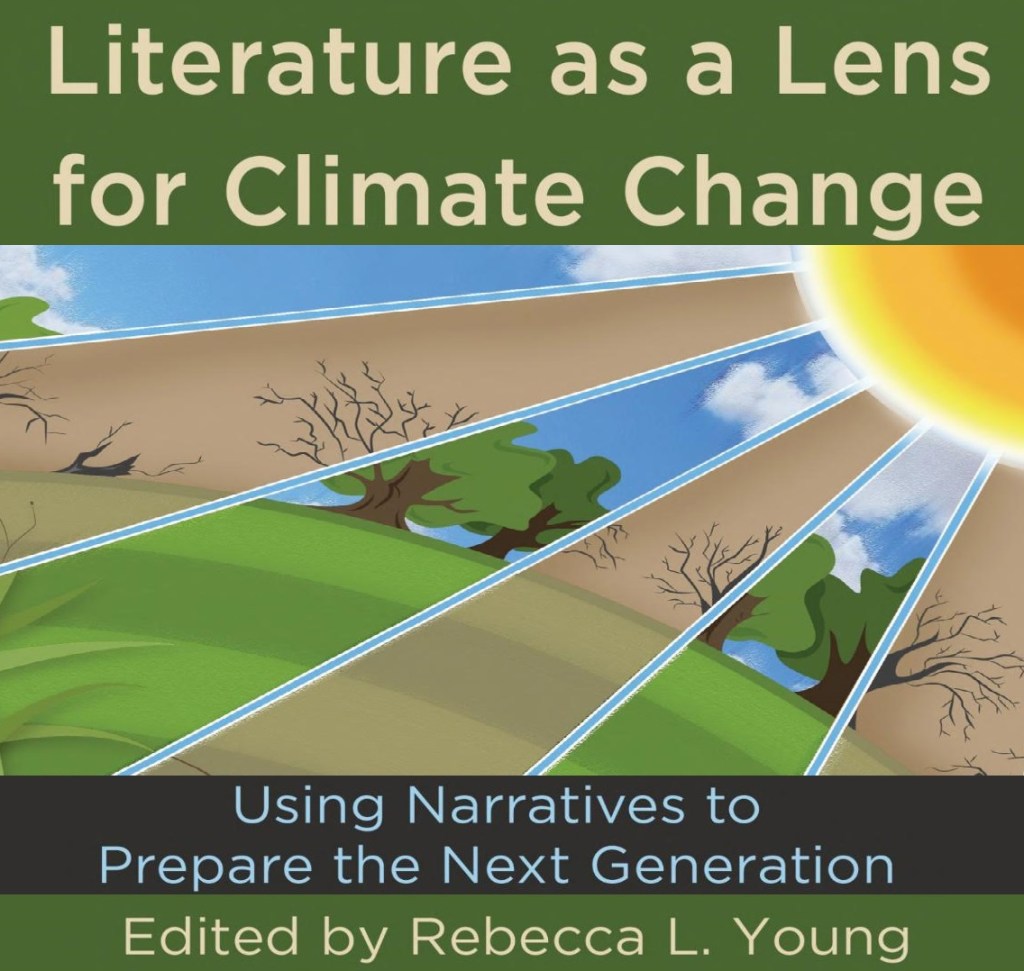
My contribution to Literature as a lens for climate change (in 5 parts) Young, R. L. (2022). Literature as a lens for climate change : using narratives to prepare the next generation. Lexington Books.
Bandura, Albert. 1978. “Self-Efficacy: Toward a Unifying Theory of Behavioral Change.” Advances in Behaviour Research and Therapy 1 (4): 139–61. https://doi.org/10.1016/0146-6402(78)90002-4.
Cohen, Stanley. 2015. States of Denial : Knowing about Atrocities and Suffering. Cambridge, Uk: Polity ; Malden, Ma.
Eckersley, Richard. 2008. “‘Nihilism, Fundamentalism, or Activism: Three Responses to Fears of the Apocalypse’ by Eckersley, Richard – the Futurist, Vol. 42, Issue 1, January-February 2008 | Online Research Library: Questia.” The Futurist 42 (1). https://www.richardeckersley.com.au/attachments/Futurist_Apocalypse_2008.pdf.
Gold, Joseph. 2001. Read for Your Life : Literature as a Life Support System. Markham, Ont.: Fitzhenry And Whiteside.
Kelly, Claire M, Johanna M Mithen, Julie A Fischer, Betty A Kitchener, Anthony F Jorm, Adrian Lowe, and Chris Scanlan. 2011. “Youth Mental Health First Aid: A Description of the Program and an Initial Evaluation.” International Journal of Mental Health Systems 5 (1): 4. https://doi.org/10.1186/1752-4458-5-4.
Konrath, S. H., E. H. O’Brien, and C. Hsing. 2010. “Changes in Dispositional Empathy in American College Students over Time: A Meta-Analysis.” Personality and Social Psychology Review 15 (2): 180–98. https://doi.org/10.1177/1088868310377395.
Kringelbach, Morten L., and Kent C. Berridge. 2009. “Towards a Functional Neuroanatomy of Pleasure and Happiness.” Trends in Cognitive Sciences 13 (11): 479–87. https://doi.org/10.1016/j.tics.2009.08.006.
O’Brien, Karen, Elin Selboe, and Bronwyn M. Hayward. 2018. “Exploring Youth Activism on Climate Change: Dutiful, Disruptive, and Dangerous Dissent.” Ecology and Society 23 (3). https://doi.org/10.5751/es-10287-230342.
Oades, Lindsay G., Aaron Jarden, Hanchao Hou, Corina Ozturk, Paige Williams, Gavin R. Slemp, and Lanxi Huang. 2021. “Wellbeing Literacy: A Capability Model for Wellbeing Science and Practice.” International Journal of Environmental Research and Public Health 18 (2): 719. https://doi.org/10.3390/ijerph18020719.
Rubin, Rhea J. 1979. “Uses of Bibliotherapy in Response to the 1970s.” Library Trends 28 (2): 239–52. https://eric.ed.gov/?id=EJ212852.
Stajkovic, Alexander D. 2006. “Development of a Core Confidence-Higher Order Construct.” Journal of Applied Psychology 91 (6): 1208–24. https://doi.org/10.1037/0021-9010.91.6.1208.
Stark, Eloise A., Peter Vuust, and Morten L. Kringelbach. 2018. “Chapter 7 – Music, Dance, and Other Art Forms: New Insights into the Links between Hedonia (Pleasure) and Eudaimonia (Well-Being).” Edited by Julia F. Christensen and Antoni Gomila. ScienceDirect. Elsevier. January 1, 2018. https://www.sciencedirect.com/science/article/pii/S0079612318300190.
Wiessner, Polly W. 2014. “Embers of Society: Firelight Talk among the Ju/’Hoansi Bushmen.” Proceedings of the National Academy of Sciences 111 (39): 14027–35. https://doi.org/10.1073/pnas.1404212111.
A team at Melbourne University is proposing a Capability Model for Wellbeing Literacy. This model attributes an agency, intention and freedom of choice (a capability) to enhance and maintain the wellbeing of ourselves, others and the wider world, made possible by way of multimodal forms of language. The team’s 2021 paper entitled “Wellbeing Literacy: A Capability Model for Wellbeing Science and Practice” (Oades et al. 2021) adds further weight to the assertion that reading enhances wellbeing.
The Melbourne University team defines wellbeing literacy as the “capability to comprehend and compose wellbeing language, (across contexts) with the intention of using such language to maintain or improve the wellbeing of oneself, others or the world”.
The article refers to language as a “resource that people use actively to construct their psychological and social realities”. Wellbeing literacy relies on being able to recognise and interpret the language of wellbeing. But as our capacity to use language expands, so does our capacity to recognise, interpret and articulate our wellbeing insights and experiences. Not only do we become agents in our own wellbeing, but we are able to make conscious choices that influence our own wellbeing and that of others, and we recognise that our state of wellbeing is a personal choice and we have the freedom to make those choices.
According to the Capability Model, language provides people with the capability to convert wellbeing opportunities into wellbeing experiences and achievements. This article also recognises that with more language opportunities comes more choices, greater freedom of choice and a broader interpretation of concept of wellbeing. Language can also reframe experiences to enhance wellbeing – an aspect of the written word as well known to poets as it is to journalists.
It is easy to see how reading supports this model: as protagonists use language to support their own wellbeing and demonstrate agency in their own choices we might start to recognise and realise our own values, agency and potential. Through the narrative we are able to find insights into our wellbeing experiences and achievements.
In the Capability Model wellbeing literacy becomes a recognisable aspect of Developmental Bibliotherapy, both dynamic and very personal, and closely connected to agency and the “freedom to choose what wellbeing means to a person and [the] choice in how that is maximised via language and knowledge.”
Ultimately, maintaining our wellbeing is a personal endeavour, related to our goals, values, relationships and past experiences. However, as language expands our capability of experiencing wellbeing, fiction provides language in context and offers a myriad of opportunities to learn the language of wellbeing and the freedom to discover, trial and explore our own unique versions of wellbeing.
Bibliography Oades, Lindsay G., Aaron Jarden, Hanchao Hou, Corina Ozturk, Paige Williams, Gavin R. Slemp, and Lanxi Huang. 2021. “Wellbeing Literacy: A Capability Model for Wellbeing Science and Practice.” International Journal of Environmental Research and Public Health 18 (2): 719. https://doi.org/10.3390/ijerph18020719.
Eco-Anxiety and Solastalgia are common responses to the distress caused by the effects of climate change – responses likely to be significantly intensified by the Australian summer of 2020. Young People and First Nations People are most severely affected.
On National TV, a young woman tearfully shares her conviction that motherhood in the near future is unsafe, unethical and a bad choice for the planet, while a young teenage protester asks for a curriculum that includes Climate Science, Media Literacy and Political Engagement.
At a “Schools Strike for Climate” rally a year 10 student talks about her fears for the future, her traumas framed by past experiences, and then, in blending pleas with demands, she calls on those in power to take action on Climate Change, care for the environment, listen to the Science and Tell the Truth.
But young people’s concerns are dismissed and they are told to study hard so they can fix the climate when they graduate. Understandably, they are increasingly becoming either extremely concerned about climate change or in denial.
“What if the problems we are causing in the natural environment are linked to the problems going on inside our heads?” asks Matt Haig (2019).
Eco-anxiety – an Appropriate Response
Eco-anxiety, the chronic fear of environmental doom, is an appropriate and reasonable response to the existential threat of climate change. With symptoms similar to other anxiety disorders, Eco-anxiety differs in that the threat posed by climate change is real so the fear is rational. Some refer to it a Pre-traumatic stress disorder – a fear of the future.
Anxiety is a common emotion, a protective mechanism. But “all anxiety contains a kernel of good news” said Rollo May observing that we would have no anxiety if we could not envision a future; anxiety contains an element of hope. In the face of the existential threat that is climate change, eco-anxiety is an appropriate response.
Understanding the “fight, flight or freeze” responses to anxiety helps to explain the varied and often polarised responses to Climate Change. For many, eco-anxiety is akin to the despair felt by Cassandra, whose gift of prophesy was frustrated by the curse of not being believed; they watch as the science is ignored in favour of populist alternatives that exacerbate the accelerating ecological destruction and make the scientific predictions even more likely. Some consider the subject too distressing or too difficult to understand, or refuse to acknowledge either that climate change exists or that it is anthropogenic. Some are overwhelmed.
However, only the fight response is considered to be the adaptive and healthy response to climate change, or, as the 350.org email informs me “Action is the antidote to despair”.
The Need for Stories
Advances in scientific knowledge have shown little or no correlation with changes in environmental attitudes or behaviour in relation to climate change. Science is bracketed out as complex, experimental and elite; knowledge is not transferring to power in tackling climate change. The lay person can feel shut out and inferior.
Stories can give a boarder audience a better sense of what is happening, framing responses and to making the science real and personal. Stories engage the emotions and reduce stress, opening the pathways to learning. Stories use metaphor and analogy to enable us to see ourselves and others from diverse perspectives, and to help us identify our values and build empathy. Stories can serve a didactic function, educating us through the voices of knowledgeable authors.
And stories have the power to motivate and inspire us by nurturing self-efficacy, optimism and resilience, which generate the hope and creative energy to act.
What is Cli-Fi?
Cli-Fi (Climate Fiction) novels are usually set in the present or the very near future with effects of climate change as a backdrop and a plot in which catastrophic events unfold amidst social and environmental upheaval. Young Adult (YA) Cli-Fi features teenage protagonists with absent or unhelpful adults and settings that are remain on a local level. The authors of YA Cli-Fi present readers with unsettling worlds, explore ways that families and relationships will be affected, the nature of heroes and villains, and how we might co-exist with the environment that we have callously disrupted.
Many Cli-Fi novels present readers with unsettling worlds where interpersonal trust has disappeared, where institutions that have previously been able to help have collapsed, where animals and plants have acquired new, monstrous properties and where even nature and the weather cannot be trusted. In these worlds, where we do not know how to distinguish good and bad, we are challenged to reflect on what is important to us, what our values are, what we need to preserve and what we are prepared to sacrifice.
In a version of Cli-Fi called ‘Solar punk’ writers opt to imagine a better, fairer world through their work. One Solar Punk writer, Sarena Ulibarri, acknowledges that “any near-future science fiction that does not engage with climate change is fantasy”.
In their didactic role, authors of YA Cli-Fi explain scientific terms and concepts, explore individual and government responses and address other unknowns for their readers, providing their readers with knowledge and empowerment and a positive perspective. By harnessing the emotions authors compel readers to recognise and act to foster change. In Cli-Fi we find heroes dealing with the impacts of climate change, adapting to the aftermath of natural disasters, and pressuring governments and corporations to act. We see alternative scenarios developed; what does martial law look like, what would you do to protect your family, or a bottle of water? Various and volatile combinations of fear, anxiety, confusion and anger, exist in Cli-Fi, and always with a message of hope.
Danish Cli-Fi researcher Gregers Andersen says (2020) “Cli-Fi plays a very significant role in helping people manage eco-anxiety. Climate fiction helps us to think about the future, gives us the opportunity to reflect on what it’s like to live in a climate collapsed world and make us realize the importance of changing to a more climate friendly way of life.”
Driven to Act
In the classroom, Cli-Fi has the potential to raise awareness in a non-threatening and non-personal way, motivating debate and inspiring action, and so potentially alleviating anxiety. Cli-Fi adheres to scientific accuracy, introducing concepts and language such as feed-back loops, tipping points, permafrost, gyres and gulf-streams that beget curiosity and discussion, and encourage research and investigation. Educators must ensure that climate change education cultivates hope and one way to do that is by empowering young people to be agents for change.
Cli-Fi can encourage us to focus our energies outwards. As we seek and connect with like-minded people, we feel less isolated, and we recognise our eco-anxiety as justified and valid. Within our new communities we can explore solutions, share problems and ideas, engage our imaginations, and learn ways to adjust to the future that is presenting itself; in the process we become less concerned with our own personal anxieties, begin to see the potential in action as an antidote for our anxiety and the possibilities in harnessing our energies for the greater good.
We find something worth fighting for; we are validated and empowered, unified and supported, and part of a global movement, huge and historical, that has come together to make the world a better place.
Paul Hawken describes this “Blessed Unrest” as “the greatest social movement in history … made up of environmental, social justice, and indigenous organisations, research institutes, community development agencies, village and citizen based organizations, corporations, networks, faith based groups, trusts, and foundations … from different economic sectors, cultures, regions, and cohorts … a global, classless, diverse and embedded movement spreading worldwide.” (from Eckersley 2007)
Eckersley identified three responses to fear of the apocalypse; Nihilism, Fundamentalism or Activism identifying “Activism: Where Hope Rules”, as the only adaptive response to the threats posed by Climate Change. Hope, formally defined as an awareness of strategies or pathways to achieve goals and the motivation to effectively pursue those pathways, has been identified as a strong predictor of recovery from anxiety disorders.
As sensations of hope inspires climate change action, and in turn, climate action generated by one’s peers can generates hope, people transform their anxiety into action as part of a united social mass of individuals who want to see a brighter future.
Driven to Adapt
But Cli-Fi has another purpose, and that is to show us our possible futures. When we read dystopian and science fiction novels, we explore other worlds with scant regard to how those worlds evolved. Cli-Fi fills in those gaps, forcing us to confront our grief and perhaps motivating us to fight harder to save those things we care about, to drive change, join rebellion and embrace activism. Cli-Fi introduces us to messages of survival; extreme weather, preppers, martial law, medical realities and societal and ecological systems collapse can all be explored in Cli-Fi.
Supportive fiction, by definition, nurtures Hope, Resilience, Self-efficacy and Optimism. But along the way we also explore and experience community, collaboration, empathy, laughter, relationships, values, alternative pathways and perspectives, validation, insight, catharsis, new information, new skills, universality, self-knowledge, self-acceptance, growth, healing, resolution, trust, alternative endings, escape, immersion, and a reframing. Good Cli-Fi can offer all of these.
Cli-Fi can help us adapt to a rapidly changing world by teaching us skills to build emotional resilience. Cli-Fi shows us that life goes on, allows us to live through our fears, disrupts our stuck thoughts and stimulates our imagination. Cli-Fi empowers us through information and understanding, knowledge and diversity and presents us with opportunities to reframe and possibly rewrite our futures. Cli-fi challenges us to accept that climate change is a fundamental part of being alive and allows us space to process the complicated feelings we have surrounding climate change. Writing original Cli-Fi can further help to process climate grief and build emotional resilience.
By inhabiting a warming planet within the pages of a Cli-Fi novel we will be better prepared to confront and respond appropriately to the unsettling and distressing realities of climate change; we will be better able to adjust to the realisation that our environment is changing rapidly and unpredictably; we will be more flexible and adaptable and able to identify the values and relationships most important to us; we will develop the emotional resilience to face the sadness and injustice accompanying climate change with courage and determination; we will identify our personal strengths and unique qualities; and we will learn that adaptation is not just coping, not just resilience, not just transformation but also the capacity to form meaningful connections with others.
Teaching Climate Change Without Creating Despair or Entrenching Denial
Is climate change education appropriate for children? Are we doom mongering? Even though the likelihood is that climate change will reach crisis point in their lifetimes, is this knowledge too great a burden for the young people in our care?
How do we raise a generation to look forward to the future with hope when all around them swirls a message of apparent hopelessness? How do we prepare today’s children for a world defined by trauma without inflicting further trauma ourselves? Where do we draw the line between responsible education and undue alarmism?
“Kids are terrified, anxious and depressed about climate change. Whose fault is that?” asks Jason Plautz (2020)
The link between Climate Change and the mental health of young adults is very real. A 2019 poll of USA teens found that Climate Change made 57% of them afraid and 52% of them angry, while just 29% said they felt optimistic.
The high school student thinks about climate change every day, she reads about how ecosystems are on the brink of collapse and listens in despair as her teachers and parents tell her that it’s up to her generation to fix things. She wonders if she will have children.
The second grader is scared about the planet but says it feels good to be surrounded by some many people (at the School Strike for Climate) who care, since he sometimes feels as if nobody else is worried. His parents are proud that their child is aware, but concerned that he could become overwhelmed by predictions that seem to be growing ever more disturbing.
And a sixth grade teacher wonders if he is violating his mandated responsibility to speak up about signs of abuse and neglect if he does not speak up forcefully about climate change and the institutions that prop up the “fictional story that you can care for kids in our country while neglecting or ignoring the climate”.
Psychiatrist Lise Susteren, expert for the plaintiffs in the Juliana vs United States Youth Climate Lawsuit (2018) is left with a sense of shame after interviewing children about their fears for nature and their worries about their future families.
Young people translate inaction by the older generations as telling them we don’t care about their future. By failing to address Climate Change in a meaningful way we are failing our young people and they know it.
Teachers have a responsibility to inform themselves about climate change so they can help young people work towards solutions and move away from rigid thinking, calm their fears about the future, and give them a sense of hope and optimism. Teachers must be prepared to empower their students by means of age appropriate knowledge, to nurture their sense of agency in their own lives, to help them recognize that the worst of climate change is not a fait accompli, to show them that solutions exist and that some progress can be made, and to encourage them to take action, be that at a personal level or as part of a larger group, as a way to process and alleviate climate change concerns.
Activism is a burden, but they should be encouraged to participate in some type of action, primarily because action is the best antidote for eco-anxiety but also to show them that they have agency in their future, and that their future is still being written.
Teachers, and parents, walk a tightrope between being honest and being comforting, between empowering young people with hope and weighing them down with the responsibility of saving the world.
Parents, also, must prepare their children to be ready to make good choices and be part of the society they will inhabit as adults. As one parent says, “It’s a disservice to our children if we don’t reach them about life’s dangers and how to protect themselves, even as we pray it will never be necessary.”
Activism or Despair?
Young people are both more susceptible to environmental-related trauma and less emotionally equipped to cope with the potential impacts. In the face of a disaster they are more likely to be affected by eroded social networks as communications fail, and more likely to be overwhelmed by grief, frustration, guilt, helplessness and anxiety in the aftermath.
Some young people must be asking “Am I sick or is the world sick?“ They might wonder “Am I the only one paralysed by eco-anxiety?” Some young people may be so overwhelmed that they retreat into avoidance and denial.
Some adults might say that it is the rhetoric surrounding climate change that is creating anxiety in young people. But children and adolescents will register our concerns via overheard conversations, news items, popular films that generate questions among their peers, or by experiencing the effects of wild weather and natural disasters unfolding around them.
They want a curriculum that prepares them for the uncertainties of a warming planet, with reliable information about the facts and the magnitude of the threat of climate change in honest, open and frank discussions with trusted and informed adults, whether in the classroom or around the dinner table, in ways they can understand.
Young people want their emotions and concerns acknowledged; they want to be able to make informed choices, and they want to feel empowered to make their own choices; to access and be able to influence policy makers; and they want to join with peers who think along the same lines.
Young people’s anxiety is fuelled by the inaction of adults even as it drives their activism. Scientist Owen Gaffney says that Eco-anxiety is the right response to the scale of the Climate Change. Yet according to marine biologist Tim Gordon “there’s a huge amount we can still do to protect what’s left and make a meaningful difference.” Young people need to receive this message.
The Role of Cli-Fi
“All great literature is subversive if not downright revolutionary” says John Marsden. “It’s important for novelists to challenge false thinking, to question, to blaze trails.”
All literature influences and models the world for readers, defining, describing and explaining the world, and challenging and shaping our values through the actions and voices of heroes and villians.
Scott Westerfeld argues that his work is not designed to manipulate the political preferences of adolescents, but rather to provide them with a forum to discuss issues and strategies for political activism and social change.
In the novel “I am David” Anne Holm’s protagonist says “Can’t you understand that children have a right to know everything that’s true? If there’s danger you have to recognize it or else you can’t take care of yourself.”
And so, in the style of G. K. Chesterton we might say …
Cli-Fi does not exist to tell children that Climate Change is real. Children already know Climate Change is real. Cli-Fi exists to tell children that Climate Change must be confronted.
At what age do we start questioning our parents’ honesty? Research tells us that, partly because it is in our best interests to do so, we happily accept the existence of Santa Claus and the Tooth Fairy until the age of eight.
And what effect does it have on us when we realise that our parents are not being honest with us?
As a parent then, how do we talk to our children honestly about climate change without causing distress? If we are not open and honest with our children we risk creating distrust, we risk alienating them and we risk fostering anxiety, just as we could foster anxiety by overwhelming them with information they may not be ready for.
And how do we support their activities and actions – some of which might have risky and far reaching outcomes – if those actions serve to relieve their anxiety and distress?
However we choose to talk about climate change with our children, eco-anxiety has been described by Dr Sarah Anne Edwards as an intelligent response to climate change that enables a better understanding and sensible choices and a movement from paralyzing emotions into empowering actions. In other words, a healthy, natural reaction to our growing consciousness of a real threat, one, she says, “we should not minimize, discount, distract or otherwise suggest palliatives to ease…” because “the more society and those around us discount the reality of the consequences at hand, the more anxious we become and the more maladaptive our responses”
Eco-Anxiety – the Mental Distress caused by Climate Change and Environmental Degradation
We are often surprised by how much our children are aware of our concerns despite our best efforts to hide them, whether pur concerns relate to a sickness in the family, relationship tensions or climate change.
In the face of the ever present indications of Climate Change in the news, in school curriculums, in reading matter and in covert adult discussions, a study from RMIT found that young people feel anxious, overwhelmed, guilty, frustrated, grief struck and powerless. But hope is fostered when they engage with other people who share their feelings and concerns, and take action to address climate change.
As for all mental health concerns, talking to all people experiencing eco-anxiety or solastasia about their concerns firstly demonstrates that someone cares to acknowledge that their feelings and concerns are real and valid. And it also provides them with the language they need to identify and articulate how they are feeling. Engaging in activities that direct their attention outwards and also foster empowerment and hope, are also good ways for people to find outlets for their anxiety.
Resources for Parents and Teachers
These sites will provide guides or starting points for conversations with children regarding disasters and climate change:
Climate change has already robbed many young people around the globe of a future resembling one their parents enjoyed; Young people are aware that the changes needed to prevent this are happening too slowly.
Having someone acknowledge, name and validate these feelings of anxiety or grief is the first step towards regaining control over them. Understanding that these feeling have a purpose is another way to gain control.
Sharing experiences with others, becoming informed, actively confronting the threat, engaging with the natural world, and realising personal values can be meaningful ways of continuing the battle against anxiety and against the threat causing it.
Eco-anxiety, the fear of an uncertain and possibly calamitous future, and Solastasia (a profound sadness caused by environmental change), are real and valid responses to the existential threat that is climate change and should not be ignored or underestimated – it may even be a motivating fear.
Everyone knows that human beings are a type of animal. Everyone knows that animals are a part of nature, and so we are a part of nature, and we are also dependant on the rest of nature. We are the natural world. We can’t destabilise nature without destabilising ourselves. – Matt Haig
“If we could read the secret history of our enemies, we should find in each man’s life sorrow and suffering enough to disarm all hostility.” Henry Wadsworth Longfellow
Three important web sites documenting Trigger Warnings to be aware of and support – the titles speak for themselves…
This database began as a Google Docs Spreadsheet in 2017. It is now a “place for readers … with triggers” who want a “safe, enjoyable reading experience”. It is a crowd sourced resource with contributions from readers, authors and publishers. There are a great number of entries organized by title.
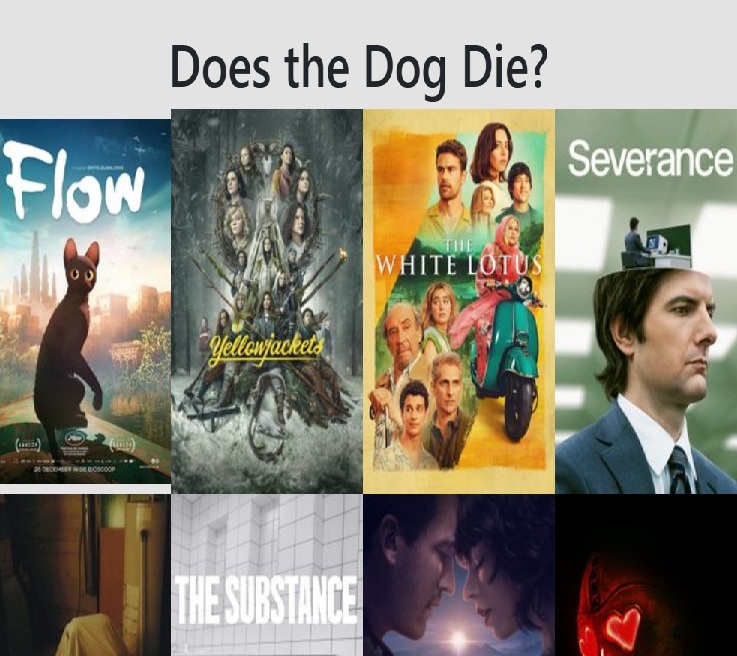
Describing itself as a community driven platform providing “Crowdsourced emotional spoilers for movies, tv, books and more” this website is a comprehensive list of Trigger warnings for many different types of media.
There is little to indicate who is behind the list but contributions are welcomed.
Another comprehensive list which can be searched using “Young Adult” as a category. Being a wiki there could be unverified, subjective or incomplete entries but it serves as a great starting point.
Congratulations to those involved in collecting this important information. All welcome contributions so keep these links handy.
Note: Goodreads has useful information as well it’s but not so easily found.
There is no magic cure, no making it all go away forever. There are only small steps upward; an easier day, an unexpected laugh, a mirror that doesn’t matter anymore.
Laurie Halse Anderson
Eating disorders and Self Harm
YA Authors take their responsibility very seriously when writing about Eating Disorders and Self Harm. There is an unpredictability that surrounds the triggers for both of these issues and for that reason, the YA fiction on this topic may be a useful way to give parents some understanding, however slight, of their child’s thoughts.
Laurie Halse Anderson, submitted the manuscript of Wintergirls, to experts on the subject of eating disorders before publication. Her challenge was to ensure that Wintergirls told the whole story.
Elena Vanishing: a Memoir by Elena Dunkle describes how difficult it was for the author to accept her problem and ask for help – an echo of her personal battle with an eating disorder.
Girl in pieces by Kathleen Glasgow begins with the protagonist in a treatment facility after a serious episode self-harm. The complex thoughts behind the decisions to self-harm are insights generously shared by the author from her own personal experiences.
These books may act as a conversation starter that creates understanding, and can also provide insights for people caring for young adults experiencing these disorders.
Note: It is important that school librarians are aware of the books dealing with eating disorders and self-harm in their libraries, and aware when students are reading them.
Suicide
No one knows for certain how much impact they have on the lives of other people. Oftentimes, we have no clue. Yet we push it just the same.
Jay Asher
Jay Asher’s 13 reasons why is not the first YA novel to address suicide, but when it became a televised miniseries it attracted the concerns of parents afraid that talking or reading about suicide may prompt young people to take the same course of action. Evidence says that the opposite is more likely to be the case – a discussion of suicide does not initiate thoughts of suicide if they are not already present, but enabling someone to discuss suicidal thoughts, whether with friends or family, is more likely to prevent them from putting those thoughts into action.
At the core of 13 reasons why is the death by suicide of a teenage girl. The novel addresses teen suicide, mental illness, reputation-worship, gossip and slander, nearsighted impulsivity, sexual abuse, and malignant narcissism. These issues resonated with teens and had a significant impact on those who read the story. The novel neither glamorised nor preached, instead leaving it up to the reader to draw their own conclusions.
Teens commented that this book made them realise how their actions could have unforeseen consequences, how seemingly small things can be compounded to produce a significant but unforeseen effect, and how we never fully realise what is going on behind the scenes for a person who we think we know quite well.
And, because the main character was guilty of inaction, it also contained a plea to those who might otherwise remain bystanders.
Last word …
Early intervention has been shown to minimise the disruption caused by mental health at all ages. YA Fiction enables early intervention by providing language, by reducing stigmas and stereotypes, by both posing and answering questions, and by facilitating conversations.









 Read For Life