Tag: Stories

  • Stories build Functional Connectivity!

    Stories build Functional Connectivity!

    What is Functional Connectivity and why is it important?


    The human brain’s relationship with stories is as long as humans’ relationship with fire. Sunlit conversations addressed practicalities or gossip, but fireside tales evoked the imagination, preserved history, settled disputes and established social customs. Stories can be described as narratives about human (or human like) agents, their relationships and their fortunes; they are “created for the purpose of engaging readers”. Le Guin describes stories as carrier bags for memories (1997), and indigenous Australians created multidimensional stories called songlines that encompassed knowledge, history and social mores that have endured for tens of thousands of years.

    Narrative comprehension takes place in the Default Mode Network (DMN), an interconnected network of brain regions active when our brain is at rest. DMN is most active during REM sleep, mind wandering and reading. However during this time it also monitors and interprets sensory information from external and internal environments including pain.

    Neuroscience has linked the DMN with recollection and prediction, thoughts about others, creativity, imagination and impulse, navigation and spatial cognition, emotional responses, and aesthetic experiences.

    But stories are much more than entertaining storage devices. Neuroscience is now finding that reading stories increases functional connectivity (FC) between the DMN, the Salience network (SN) and the Central Executive Network (CEN). FC describes the likelihood that these different regions of the brain will become active at the same time. The DMN is responsible for random, creative, diverse and often disconnected thoughts, as well as interpreting external and internal stimuli; the SN determines which thoughts and stimuli are likely to be relevant and meaningful and therefore productive and useful; while the CEN, maintains working memory, and is responsible for controlling attention, logical judgment, and decision-making.

    Not only are high levels of FC is linked to creativity, decision making, divergent thinking, concept development and academic performance and even healthy aging, but increased FC is also linked with higher levels of resilience and wellbeing in young people.

    Neuroscience is providing empirical evidence from around the globe linking stories to Functional connectivity. Functional connectivity underpins self-actualisation, wellbeing, healthy aging and social adaptation. Yet many countries are diverting funds from qualified school library staff and story based resources. How can educators let this continue?

    Download PDF version with references.

  • Narratives in Neuroscience (Pt2) Highlights from the Research

    Narratives in Neuroscience (Pt2) Highlights from the Research

    Integrative Literature Review & Reflexive Thematic Analysis

    A literature review (LR) is conducted to provide a snapshot of the research on a particular topic at a point in time. An integrative literature review (ILR) differs in two ways; firstly, the ILR allows material for analysis to be selected from a broader base including books and interviews; and secondly, the author’s role in presenting a novel interpretation of the material is deemed to be the purpose of ILR. The Reflexive Thematic Analysis (RTA) also emphasises the author’s interpretive process, initially while identifying and selecting themes emerging from the examination of the literature, and later while performing the analysis of the literature using these themes as a focus.

    Forty peer-reviewed studies were selected for this IRL. These studies use naturalistic stimuli, such as narratives, to produce patterns of activity within the Default Mode Network (DMN) which are examined using fMRI analysis. FMRI identified DMN as the region of the brain most active when the brain was in a resting state in 2001. The selected studies were all published after studies using naturalistic stimuli were revealed as having the greatest ecological validity, or real world implications, in 2008; 73% of the selected studies have been published since 2015, with almost half of these published in the last four years. In 2023 examination into the effects produced in DMN by naturalistic stimuli appears to be confined to the realm of cognitive neuroscience.

    Three distinct, yet closely associated themes were chosen for the RTA. These themes, reflect the important functions of DMN, and support the proposal that DMN is central to the Concept Building Brain, facilitating the development of language; the Storytelling Brain enabling the efficient transmission of thoughts and emotions; and the Social Brain encompassing reflection, simulation and foresight. The selected studies expand on these themes and suggest they form an Evolutionary Triptych which formed the driver for human evolution. [GO BACK]

    Both narrative comprehension and effective communication requires accurate transmission of information, thoughts and experiences between individuals. Although this will depend on a shared understanding, knowledge and interpretation of the language and modality of a discourse, effective transmission of information will also depend on a shared meaning, or mental model, of the concepts and relationships within that discourse. This mental model is referred to as a “situational model”. FMRI reveals how the human DMN endeavours to maintain coherence in this situational model which is built from a multifaceted, multilayered, interrelated catalogue of concepts, which is itself being continually updated with incoming, and often conflicting, information—such as during the unfolding of a narrative. Naturalistic stimuli in the form of silent movies demonstrate not only that retrieval, updating and integration of information in memory occurs in DMN, but that DMN acts as a temporary location for incomplete information, synthesising new intrinsic and extrinsic information, and updating the situational model with this new information as it became available. Significantly, the process of creating and updating situational models—which includes creating relationships, generalising, updating and even nesting concepts—occurs within DMN in ways that are independent of both language and mode of delivery.

    One recent study which found that relationships between concepts can be both widely distributed across DMN yet also located in overlapping areas, and nested but simultaneously generalised, proposed that concepts are encoded together with the relationships between concepts, and that DMN is central to the semantic processing of these concepts. Authors of this study also reported that activity in the dorsal attention network (DAN)—activated during focused attention—increased and DMN activity decreased as concepts became more concrete;  and that left hemisphere activity was more likely to be associated with concrete concepts while the right hemisphere was associated with more abstract concepts.

    Naturalistic stimuli includes narratives presented as printed matter, audio files, film, silent movies, and animation, but can also include photos used to prompt personal narratives, imagination or memory. Studies using naturalistic stimuli have demonstrated not only that DMN processes concepts in ways that are independent of language, but also that narrative processing activates regions of DMN associated with Theory of Mind (ToM), and that neither language nor mode of presentation impact on how DMN processes concepts and relationship between concepts. This final point suggests that DMN capability to store concepts, relationships, and relationships between concepts—a capability necessary to facilitate communication— possibly predates the development of language.

    FMRI can monitor how complex concepts are processed both within DMN and over time. Although DMN activity is unrelated to language during comprehension, language is used to construct, integrate, relate and augment meaningful concepts first as words, then sentences, and then paragraphs during a “temporal receptive window” in which information is stored before being processed. This time lag—between processing and integrating complex ideas from the language processing areas, through the DAN and finally within the DMN—can be up to six seconds. During comprehension the sensory and language processing areas are deactivated as DMN is prioritised, and are reactivated when DMN resets at “event boundaries” (points of conceptual or perceptual change) in a narrative.

    These studies from the field of neuroscience indicate the fundamental role of DMN in Concept Building, and thus narrative comprehension, as information from external stimuli is combined with existing memories and beliefs to create, refine, augment and update concepts and relationships between concepts, within DMN’s situational model, in ways that are independent of language. They show that narrative comprehension is a hierarchical process, with words and sentences buffered within DMN before being synthesised, nested or generalised into more complex concepts. Finally, they show that event boundaries in a narrative are associated with consolidation of concepts as the concept building DMN is deactivated and reset in preparation for generating or updating the next situational model. [GO BACK]

    InterSubject Correlation (ISC) is a phenomenon, identified using fMRI analysis, in which brain responses to external stimuli are shown to replicate across individuals. ISC is the strongest evidence from neuroscience that emotional content in stories can be transferred from the storyteller’s brain to the brains of their audiences. Furthermore, indications that ISC corresponds to specific points in a coherent narrative suggests that regions of the human brain, such as DMN, are designed to respond to elements characteristic of stories. FMRI and ISC also identify patterns of activity linked with naturalistic stimuli indicating that DMN interacts with other regions of the brain, referred to as functional connectivity (FC). Furthermore, reading fiction has been shown to increase FC, which in turn has been linked to increased creativity and also increased resilience.

    ISC patterns of activity in regions of DMN related to Theory of Mind (TOM) also confirm that prior beliefs and cultural influences affect responses to moral issues, interpretation of events, the lenience or severity of punishment, the subjective rating of comedy, and other emotional responses to naturalistic stimuli. Thus ISC and fMRI analysis confirms that narratives invoke a response directly related to personal perspective—and therefore a response from DMN—providing a neurological explanation of why each person’s interpretation of a narrative is unique.

    FMRI analysis using naturalistic stimuli shows increased ISC within groups of participants with similar psychological outlooks and personality types, and with proximity in social media friendship circles. Not only does ISC confirm that naturalistic stimuli are processed within the DMN in ways that are unaffected by mode of delivery, but ISC also identifies a “strong social structure for DMN” independent of language.

    ISC and naturalistic stimuli have demonstrated differences in DMN activity associated with problem solving styles, specifically holistic versus analytical thinkers. ISC showed that DMN activity in holistic thinkers was more strongly associated with regions related to moral processing and self-reflection, while ISC among analytical thinkers occurred more often in DMN regions associated with object and motion processing, and intentional and emotional mentalising. As thinking styles can be culturally related, these results confirm with empirical evidence that culturally diverse teams, study groups and friendship circles can benefit from cultural differences in problem solving styles.

    ISC demonstrates how narratives improve consensus building and team coherence, also indicating that greater ISC, and thus more effective consensus within groups, occurred in groups having freer and more balanced distribution of members’ contributions to discussion. Naturalistic stimuli and ISC suggest that leaders are more supported by team members and teams are more creative and successful, when team leaders are allowed to emerge or be appointed by team members during a task. These studies also suggest, firstly, that narratives can be used to promote consensus, encourage effective discussion of ideas and reveal the best team leaders for creative problem solving; and secondly, that the process of appointing team leaders might be determined by the goals of the team—be they creative problem solving, consensus or productivity.

    Studies investigating the role of the storyteller using fMRI and ISC have produced findings which suggest the role of the storyteller is significant for enhancing comprehension in their audiences; comprehension, indicated by greater ISC, is related to active engagement, prediction and thus successful communication. In a series of studies, ISC was found to be greater between storyteller and audience when the storyteller was retelling a story recalled from memory, or describing an event they were watching unfold, rather than reading a narrative. Greater ISC could indicate that the storyteller has tailored the story to their audience—evaluating the relevance of events and adjusting the complexity of details to assist comprehension. Once again, ISC occurred in regions of DMN which corresponded with the story’s social aspects and values. These studies found DMN also encoded information in regions related to the mirror neuron system (MNS), such as emotion, which is reactivated and transmitted during recall.

    Naturalistic stimuli in studies focusing on ISC between individuals provides empirical evidence suggesting that DMN selectively encodes into memory the narrative elements, including emotional responses, which are likely to be most relevant or essential for successful transmission of meaning to others, either immediately or as part of a more complex story. ISC also provides empirical evidence demonstrating that narratives are processed within DMN in ways that generate social coherence, consensus, shared goals, and even identify the most unifying and effective leaders. In these studies neuroscience has provided empirical evidence suggesting that information shared as narratives promotes ISC which enhances effective communication and widespread understanding and thus supports the Storyteller role of the human DMN. [GO BACK]

    In 2001 DMN was identified as a network of brain regions most active during Mental Time Travel (MTT). MTT refers to the spontaneous and self-referential thoughts that occur when the brain is not focused on external activities. During MTT the DMN is unresponsive to external sensory input such as audio or visual stimuli. MTT emerges in early childhood, possibly in children as young as three years of age and it is estimated that an adult can spend more than 60% of their waking life thinking about the past or imagining the future.

    It is the personal and social context of MTT which indicates the role of DMN as the Social Brain. Memories, plans, simulations and perspectives are self-referencing, therefore the DMN which is associated with introspection, self-projection, self-location and Theory of Mind (ToM) is strongly implicated in MTT. The temporal landscape of MTT varies; episodic memory engages MTT in revisiting the past while episodic foresight in the form of simulation, prediction and planning, takes place in an imagined future.

    The purpose of MTT also varies and DMN interacts with other regions of the brain accordingly. Goal directed MTT, such as planning, problem solving or imagining future scenarios, are “supervised” by the executive and salience networks which evaluate thoughts for relevance and feasibility. Spontaneous thought chains are characteristic of “unsupervised” MTT”. Thoughts associated with weighing alternatives, or making moral judgments are considered to be “contextual” MTT while “non‑contextual” MTT occurs during REM. Non-contextual thoughts occurring in certain mental illnesses such as delusion and schizophrenia appear to be associated with poor FC between DMN and the executive and salience networks. Divergent thinking and creative problem solving, while associated with MTT, are related to high FC between DMN and other regions of the brain during MTT: however, the Aha! Moment (insight) is most likely to be associated with periods of MTT dominated by DMN exhibiting unique behaviours.

    Skilled authors, aware that MTT is associated with engagement, transformation and immersion in a narrative, use literary techniques such as time and perspective shifts, conflicting or missing information, and fallible narrators to generate reflection, confusion and prediction errors, and invoke MTT in readers. Narratives invoke MTT which is externally guided as readers, prompted by the storyteller, imagine other worlds, step into the lives of other beings, and engage in self-reflection in ways that promote enduring personality change, and yet uniquely personal. MTT also informs the interpretation and understanding of essential literary elements such as metaphor and simile; it gives authenticity to simulations and predictions of events in fictional worlds; it facilitates empathy; and it engages with the MNS and the dopaminergic regions which register feelings of reward and punishment alongside opportunities to learn from the mistakes of others. MTT is considered to be an essential part of the reading experience.

    MTT is responsible for increased deviation from, and a hindrance to the successful completion of, many tasks. However, many consider MTT, characterized by spontaneous and stimulus independent thought, as an activity unique to humans, important for maintaining the DMN in operational but “autopilot” mode during periods of boredom—a baseline level of arousal which facilitates optimal performance on mundane tasks. A study which investigated both these possibilities, using fMRI analysis and naturalistic stimuli, identified an inverse relationship between MTT (DMN activation) and focused attention (DAN activation) along a gradient (rather than a dichotomy). High DMN activity was found to produce faster and more accurate results at some stages of the test, while at other stages produced slower and more error-prone results. Although DMN activity associated with MTT generally produced poorer results, DMN activity was often linked to faster reaction times, better target detection, and practiced effortless performance associated with “flow” or “being in-the-zone”. A later study indicated that DMN/DAN activity was context dependant, determined by the saliency and predictability of incoming information; in predictable situations the DMN switched to autopilot mode and acted as a sentinel which contributed to rapid decisions based on predictions, best-guesses and learned information— important socio-emotional skills.

    Studies which demonstrate that MTT can be associated with eye-blinking during a reading task provide insights into comprehension; as DMN is engaged for internal processing such as problem solving or comprehension, an eye blink coincides with the deactivation of the visual processing regions of the brain; the subsequent reengaging of these visual or audio sensors coincides with another blink. Naturalistic stimuli and fMRI reveals that MTT can play a significant role in conceptual learning, and blink patterns might indicate when this is occurring.  

    In 1986 Joseph Bruner described how readers of fiction inhabit landscapes of consciousness when engaging with characters, and landscapes of action when engaging with objects, scenery and actions. FMRI analysis of DMN patterns have shown that engagement with characters (ToM) and engagement with actions and scenery correspond to two distinct regions of the DMN during MTT. While participants might show a preference for one form of engagement over the other, researchers noted firstly that this preference was not mutually exclusive but rather was an inverse relationship along a gradient; and secondly that participants could shift between the perspectives of consciousness and action when prompted by guided questions. A more recent study, examining MTT as a function of engagement with characters using ISC, found that engagement with characters invoked greater ISC between participants than engagement based on action; that patterns of activation in DMN were related to the participants’ positive or negative engagement with the narrative’s characters; and that positive engagement with characters activated the dopaminergic network—the regions of the brain associated with reward and pleasure, error-prediction, surprise, risk assessment and creativity. This finding suggests that readers experience vicarious rewards and positive emotions alongside those of their preferred characters. In short, these studies suggest that targeted questions can encourage readers to engage with characters, and also that during positive engagement with characters the brains of readers are registering emotions related to reward and pleasure.

    During MTT images relating to the future appear more vividly than images recollecting past events, suggesting that the main purpose of MTT is foresight and prediction. Additionally, near future events are more likely to be linked to areas of DMN associated with concrete concepts, while goals that are further into the future are associated with areas of DMN that represent abstract concepts. When asked to imagine future events, DMN activity indicated that MTT combines memories into future projections, and also that imagining potential future social interactions includes emotional and adaptive responses, once again suggesting that simulation, prediction and projection might be the chief function and purpose of the human tendency to engage in MTT. And while the definition of narratives can be applied to non-fictional accounts as well as fiction, participants are more likely to engage with fictional characters, consider their motives and emotions, and speculate about possible outcomes, whereas for passages labelled as non-fiction participants’ responses indicated that the outcome was seen as having already been determined since the narrative was understood to be describing an event that belonged in the past. Thus MTT, which facilitates comprehension, communication, creativity, social awareness and vicarious experiences, appears to be inclined towards foresight in preparation for the future.

    FMRI shows that the processes of reading which involve simulation—including evaluating the behaviours and motivations of fictional characters, scene building and imagining future scenarios—recruit the regions within the DMN which correspond to vividness, social content and abstract concepts; that MTT involving simulations related to engagement with the social content within a fictional narrative enhances readers’ socio-emotional skills; and that greater reading frequency leads to greater FC which is linked to increased creativity, resilience and a broader moral perspective.

    Thus, DMN role as the Social Brain can be demonstrated firstly by studies highlighting the self-referencing aspect of MTT which revisits and examines memories, emotions, goals, beliefs and relationships in a self-reflective process; secondly, by studies which indicate that the primary role of MTT is to recombine these past events into future projections, where memories provide a realistic basis for simulation, prediction, adaption and creativity, informing foresight and facilitating learning; and finally, by maintain an autopilot mode for  DMN which facilitates rapid assessment of and response to both real and social environments. [GO BACK]

    Discussion on the Reflexive Thematic Analysis

    Investigating the actions of naturalistic stimuli on the human brain using the tools of cognitive neuroscience provides empirical evidence that the Concept Building Brain creates, updates and stores multifaceted concepts which include spatial, temporal and emotional content, including reward and pleasure, in processes which are independent of language. Moreover, while every individual brings a unique and personal set of past experiences and beliefs to the interpretation of a narrative, ISC indicates that specific attributes of those experiences and beliefs, such as emotion, are associated with particular areas of DMN, suggesting DMN also plays a fundamental role as the Storytelling Brain.

    Studies examining ISC also indicate that narratives align participants who share common experiences and beliefs, but also provide vicarious learning opportunities to expand those experiences and beliefs, thus encouraging cultural diversity; and narratives can unite communities and reinforce social values by framing fictional events within established social and cultural mores. In addition, these studies highlight the importance of MTT in narrative comprehension, and the fundamental relationship between narratives and self-reflection, personality, personal goals and values, and the development of ToM. Neuroscience, therefore, provides empirical evidence of relationships between narratives and both self-referencing and social foundations of MTT, which suggests DMN acts as the Social Brain.  

    Thus, this RTA demonstrates the apparent tendency for DMN to make meaning, ensure social cohesion and nourish foresight, and suggests that the human DMN developed as an Evolutionary Triptych, comprising the Concept Building Brain, the Storytelling Brain and the Social Brain.

    This ILR indicates the impact of stories on DMN–the regions of the brain associated with personality and behaviour– and invites further study into the role of stories in supporting educational outcomes and socio-emotional development in children. But this sample of studies which investigate DMN under the influence of narratives also provide empirical evidence of interactions between DMN and the dopaminergic system, the salience network, the executive control network and the dorsal attention network during narrative comprehension; interactions which could impact all aspects of personality and personal potential, including creativity, social interactions, planning, insight and self-perception, to name just a few. Therefore, the evidence showing how narratives guide positive and constructive MTT suggests that narratives written for young adults have the potential to promote adaptive behaviours, especially during adolescence when social and emotional factors are key motivators for learning.

    It has been suggested that social selection, reinforced at least in part by narratives, has shaped human evolution, more so in humans than in any other species, and possibly more so than the forces of natural selection proposed by Darwin. It is not implausible then to suggest that the rapid pace of human evolution and the advancements in human intellect would not have occurred without stories.
    [GO BACK]

    Photo by S O C I A L . C U T on Unsplash

  • Narratives in Neuroscience (Pt1) An Integrative Literature Review

    Narratives in Neuroscience (Pt1) An Integrative Literature Review

    What fMRI analysis of the Default Mode Network
    can reveal about the impact of Stories on the Human Brain

    Introduction

    Narratives are increasingly being used in neuroscience as naturalistic stimuli for studies employing Functional Magnetic Resonance Imaging (fMRI) analysis to examine the regions of the brain collectively known as the Default Mode Network (DMN). Using naturalistic stimuli ensures these studies have sound ecological validity, and fMRI analysis provides robust quantitative evidence validating the importance of narratives in healthy socioemotional development – a bond that has previously been largely demonstrated using qualitative studies. Thus results from these studies provide an untapped pool of empirical evidence demonstrating the relationship between narratives and social and emotional development.

    When taken together these studies suggest that the role of narratives in this relationship is not incidental; rather that narratives, language, and self- and social-awareness are interdependent and have developed as an evolutionary triptych, central to the evolution of the human DMN and its role in the unique ability of humans to accumulate and share knowledge. Reinterpreting studies of narratives in neuroscience through an educational lens reveals the potential for stories to enhance self-actualisation in children and adolescents, especially in reading programs such as those encompassing Developmental Bibliotherapy. This novel approach provides a framework by which existing fMRI analysis can provide a source of empirical evidence for a broader investigation into the importance of narratives in adolescent wellbeing and education. [GO BACK]

    Stories and Personality

    Storytellers and their audiences know how stories can influence and change our view of ourselves, others and the world. Stories, or narratives, reveal how interrelated events, unfolding over time affect the fortunes and relationships in the lives of the story’s characters. Narratives often contain moral or didactic messages embellished with richness in meaning and emotional content which encourages engagement and transportation into characters’ minds, and ensures these messages are understood and remembered. Readers are swayed, challenged and persuaded, and engage in simulation, prospection and prediction.

    Immersion in a story can induce a flow state, where time can be distorted, and where our brains reject external sensory stimuli in preference to the adventures within our imagination as it engages with the perspectives of other lives and the possibilities of other worlds. For some, this is the purpose of narratives – one enters into the contract of story, not only fully aware that narratives require emotional commitment, but eagerly anticipating the experience.

    Transportation into fictional lives and locations can be so complete that readers’ mirror neurons respond as if they were physically experiencing the world of the story. Emotions are experienced vicariously as the story’s protagonists exhibit character attributes of core confidence – such as hope, efficacy, resilience and optimism – and develop a growth mindset where new experiences are reframed as adventures, feedback from trusted allies is acknowledged and accepted, and failure is met with resilience and regarded as learning opportunity.

    When Campbell’s hero of the didactic Bildungsroman genre returns home transformed, empowered and enlightened, by association so does the reader. Along the hero’s journey readers vicariously experience reward and pleasure as they proudly, albeit vicariously, enjoy the hero’s successes and learn from the hero’s failures. Stories help to clarify, explain, normalise and validate emotions and experiences in ways that enable the transformative power of catharsis. Stories can also become instruments of comfort; as the story’s audience becomes aligned with the protagonists they feel less isolated and alone; and by enabling them to experience protagonists’ viewpoints, audience members become aware of others’ perspectives and also become more aware of their own.

    Fictional narratives can promote creativity and provide intellectual opportunities, stimulating the imagination with problems or mysteries, and augmenting knowledge. Audiences, given insights into protagonists’ motives and intentions, are able to view the same events from multiple perspectives, broadening their own emotional experiences. Escapism, using the “novel as a therapeutic experience”, and vicarious learning opportunities can be significant intellectual responses. Our intellectual flexibility is challenged by narratives which reveal conundrums, surprises and secrets, introduce fallible heroes, present uncomfortable truths or use humour to shock and surprise. Engagement with narratives can inspire, motivate, guide self-reflection, enhance wellbeing and nurture self-actualisation.

    During childhood fictional narratives can provide safe play spaces where key life skills can be shaped, tested and refined. These fictional play spaces can help to frame personal narratives, shape personalities, enhance confidence, and help to identify, clarify and define personal identity including values and beliefs. Stories become a pathway for young readers to form personal identities as they begin to identify and name themselves in the context of the world. [GO BACK]

    Reading and wellbeing

    Although fairy tales, folk tales, myths, anecdotes, novels, chronicles, biographies, legends, falsehoods, descriptions of news items and yarns can all be considered narratives, fiction provides the greatest opportunity for personal transformation and thus the greatest potential to enhance wellbeing. Comprehension and self-reflection is associated with engagement with a narrative’s content. Engagement with a narrative is a personal relationship which occurs regardless of either reading proficiency or literary content of the narrative, and is also associated with reading for pleasure. Engagement with a hero who is validated, enabled, enlightened and returns home triumphant in a future which is always positive has the potential to promote wellbeing by stimulating the reader’s dopaminergic system.

    Studies linking narratives with benefits to social and emotional development in the developmental stages of childhood and adolescence are not difficult to find. And yet schools are divesting resources from school libraries, and the numbers of qualified school librarians is dwindling. Prior to 21st century, research documenting the relationship between narratives and wellbeing has been limited to findings derived from studies which rely on qualitative, subjective, anecdotal and intuitive data. However, the relationship between stories and socio-emotional development and wellbeing is a relationship that has also been difficult to prove using scientific methods: each person’s interpretation of a narrative is individual, personal, and unique, influenced by memories, inferences, experiences, and reading styles that are infinitely varied. [GO BACK]

    Decoding the Default Mode Network

    The Default Mode Network (DMN) is an interconnected group of regions within the human brain. DMN was initially identified in 2001 as the regions of the brain most active when the brain is in a wakeful but resting state. DMN is now recognised as being the brain’s centre for personality, and self-referential mental activity including the processing of emotions and memories. It is active during spontaneous cognition, including mental time travel (MTT) and REM sleep. DMN begins to develop from early infancy and is shaped by both personal and vicarious experiences.

    Functional Magnetic Resonance Imaging (fMRI) is a non-invasive method used to observe DMN responses to external stimuli. Studies using fMRI analysis are beginning to reveal the significant role of the human DMN as the brain’s primary network for personality, memory, imagination, forethought, intuition, moral judgment, mentalising and all other self-referential thoughts and behaviours. FMRI also reveals how DMN interacts – its functional connectivity (FC) – with other regions in the brain. FC between the DMN and the executive control and salience brain networks suggests that these other networks act to monitor and evaluate the feasibility and reasonableness of ideas, plans and memories during MTT. FMRI studies show that FC between DMN and other regions of the brain is strengthened by reading fiction, and also that increased FC in the brain is associated with increased resilience in the face of setbacks. The dopaminergic system, which registers emotions associated with reward, such as pleasure, also has FC with DMN. Delusion, depression, Alzheimer’s, schizophrenia, OCD, ASD and ADHD have been associated with changes in DMN and its FC with other regions of the brain, especially the executive control and salience networks.

    Speculation of the role of the DMN, especially during MTT and REM, varies from it being a sentinel keeping watch for dangers from the external environment, to a process which maintains the brain in an autopilot role during otherwise boring activities, to the essential feature of the human brain which distinguishes us from other animals. Egocentric sensory information such as pain is also monitored by DMN, even during REM sleep.

    DMN is central in the processing of memory, emotion, language, imagination, simulation, planning, prediction, navigation, and thinking from others’ perspectives (known as Theory of Mind (TOM) or mentalising). DMN is also closely associated with vicarious learning, curiosity, intuition, and creative insight – sometimes referred to as the AHA! Moment. Humour and literary elements such as metaphor and simile are also processed in DMN. This close alignment between the complex processes associated with language independent comprehension and the processing responsibilities associated with DMN suggested the use of naturalistic stimuli in empirical studies of social behaviour in humans.

    The use of narratives as stimuli for fMRI studies offers a number of advantages: narratives are engaging, and their use does not require training; narratives can be reproduced, selectively edited, and their presentation mode varied; and narratives can be independent of language. Naturalistic stimuli have demonstrated how the human DMN changes, and reconfigures when presented with unfolding, or conflicting story elements and a functional subdivision of the DMN has been identified – named the Chrono architecture – which updates the brain’s spatial and temporal information. Narratives in neuroscience have revealed how the DMN responses differ between character based and action based fiction, and between fiction and non-fiction. The use of narratives as naturalistic stimuli although nascent, is increasingly providing neuroscience with insights into how the human DMN processes real-life sensory experiences. [GO BACK]

    An Evolutionary Triptych

    It seems that the human DMN may have three interconnected roles: firstly, a concept building role, responsible for recognising, creating, recording, recalling and sharing concepts, and relationships between concepts, that facilitate communication via the development of language; secondly, a storyteller role to facilitate the transmission of information in a format that was easily comprehended and remembered, and which encouraged appropriate responses; and finally, a social awareness role which enabled early humans to consider another’s perspective, and set the foundations for social mores and customs. FMRI studies indicate that the human DMN possibly developed as an evolutionary triptych incorporating the Concept brain, the Story brain, and the Social brain in a mutually enriching and supporting scaffold for ongoing human development. [GO BACK]

    The Concept Building Brain

    DMN has the ability to build, maintain, augment and reject relationships and concepts giving rise to the notion of DMN as the Concept Building brain, Although independent of language, this ability to generate relationships and recognise patterns is fundamental for the development of language. These roles of DMN, particularly the relationship building role, also provides evidence of the mechanisms involved in learning, association, spontaneous thought, creativity, intuition and MTT. [GO BACK]

    The Storytelling Brain

    DMN has also been called the Storytelling Brain as fMRI analysis has revealed regions of DMN are activated during the high level processing of narratives; regions involved in memories, emotions, plot formation and scene building, navigation, and prospection have been identified using naturalistic stimuli including narratives. Furthermore, curiosity indicates that in the absence of stories the human DMN will try to find one in an attempt to make meaning. Narratives simulate real world situations by using just the essential elements necessary to efficiently transmit information, assist cognition and convey context; it has been suggested that the transfer of information between humans is the primarily role of stories. [GO BACK]

    The Social Brain

    DMN is the location of our personality and could be appropriately named the Social Brain. Narrative comprehension engages the neural mechanisms associated with personality, perspective taking and Theory of Mind (TOM), thereby supporting socio-emotional development and self-actualisation. FMRI has revealed how DMN engages memory and prior experiences during narrative comprehension, and how these memories and prior experiences can be projected into the future.

    InterSubject Correlation (ISC) – a measure of the extent to which DMN activity patterns revealed by fMRI analysis are found to be similar within a group of participants – provides neurological examples of information being transferred between a storyteller and their audience, and the context of a narrative itself increasing ISC between listeners during the telling and into the future. Studies of ISC in DMN responses to both humour and suspense highlight how memory and culture are linked to emotional responses. ISC can be observed while DMN is stimulated using naturalistic data in written, auditory and audio-visual narratives, as well as music, and aesthetic performances, providing evidence of the variety of activities that produce this unifying response, in ways that are independent of language.

    FMRI studies also demonstrate the actions of the Mirror Neuron System (MNS) which is responsible for a phenomenon whereby a set of neurons corresponding to the action of an individual is activated in an observer, unifying the execution of an action by one person with the perception of the action in another. The MNS enables people to experience and learn actions and emotions vicariously, including those associated with social situations. Narratives also promote positivity and vicarious pleasure in the dopaminergic system.

    DMN activity was initially thought to be associated purely with task-negative activity since DMN activity is anticorrelated with the task-positive dorsal attention network (DAN). However, using narratives in neuroscience can demonstrate that DMN is functionally connected to regions of the brain necessary for wellbeing such as the executive control and salience networks. [GO BACK]

    References for Narratives in Neuroscience Research Project

    Part 2 – The Integrative Literature Review – Reflexive Thematic Analysis

    Part 3 – Implications for Education

  • Using Cli-Fi to Reframe Responses to Climate Change – Podcast

    Using Cli-Fi to Reframe Responses to Climate Change – Podcast

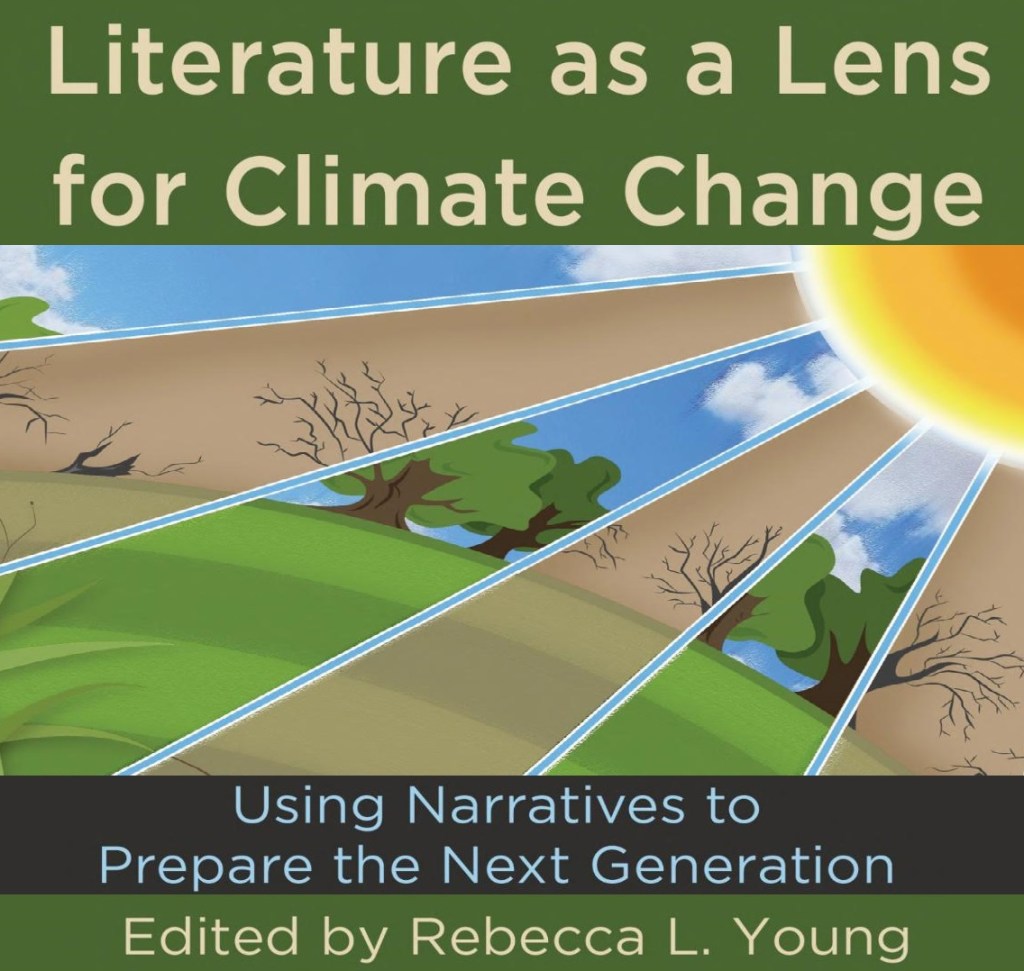
    My contribution to Literature as a lens for climate change (in 5 parts)
    Young, R. L. (2022). Literature as a lens for climate change : using narratives to prepare the next generation. Lexington Books.

    Listen here or Subscribe to Developmental Bibliotherapy Podcasts on Spotify

    Part 1 Introduction: Teaching Climate Change without Creating Despair or Entrenching Denial
    Part 2 Activism: Where Hope Rules
    Part 3 Harnessing the Power of Stories
    Part 4 Reading and Well-Being
    Part 5 Developmental Bibliotherapy and CLi-Fi
    References

    Albrecht, Glenn. 2012. “The Age of Solastalgia.” The Conversation. August 7, 2012. https://theconversation.com/the-age-of-solastalgia-8337.

    American Library Association. 2017. “Professional Ethics.” Tools, Publications & Resources. May 19, 2017. http://www.ala.org/tools/ethics.

    Andersen, Gregers, and Carsten Munk Hansen. 2014. “Fiction Prepares Us for a World Changed by Global Warming.” Humanities.ku.dk. University of Copenhagen. November 10, 2014. https://humanities.ku.dk/news/2014/fiction_prepares_us_for_a_world_changed_by_global_warming/.

    Bandura, Albert. 1978. “Self-Efficacy: Toward a Unifying Theory of Behavioral Change.” Advances in Behaviour Research and Therapy 1 (4): 139–61. https://doi.org/10.1016/0146-6402(78)90002-4.

    Cohen, Stanley. 2015. States of Denial : Knowing about Atrocities and Suffering. Cambridge, Uk: Polity ; Malden, Ma.

    Duggan, Joe. n.d. “This Is How Scientists Feel.” Is This How You Feel? Accessed June 25, 2021. https://www.isthishowyoufeel.com/this-is-how-scientists-feel.html.

    Eckersley, Richard. 2008. “‘Nihilism, Fundamentalism, or Activism: Three Responses to Fears of the Apocalypse’ by Eckersley, Richard – the Futurist, Vol. 42, Issue 1, January-February 2008 | Online Research Library: Questia.” The Futurist 42 (1). https://www.richardeckersley.com.au/attachments/Futurist_Apocalypse_2008.pdf.

    Edwards, Sarah Anne. 2008. “Eco-Anxiety: An Intelligent Response.” Eco-Anxiety. March 20, 2008. http://eco-anxiety.blogspot.com/2008/03/by-sarah-anne-edwards-phd-lcsw-articles.html.

    Gold, Joseph. 2001. Read for Your Life : Literature as a Life Support System. Markham, Ont.: Fitzhenry And Whiteside.

    Kelly, Claire M, Johanna M Mithen, Julie A Fischer, Betty A Kitchener, Anthony F Jorm, Adrian Lowe, and Chris Scanlan. 2011. “Youth Mental Health First Aid: A Description of the Program and an Initial Evaluation.” International Journal of Mental Health Systems 5 (1): 4. https://doi.org/10.1186/1752-4458-5-4.

    Konrath, S. H., E. H. O’Brien, and C. Hsing. 2010. “Changes in Dispositional Empathy in American College Students over Time: A Meta-Analysis.” Personality and Social Psychology Review 15 (2): 180–98. https://doi.org/10.1177/1088868310377395.

    Kringelbach, Morten L., and Kent C. Berridge. 2009. “Towards a Functional Neuroanatomy of Pleasure and Happiness.” Trends in Cognitive Sciences 13 (11): 479–87. https://doi.org/10.1016/j.tics.2009.08.006.

    Lilleslåtten, Mari , and University of Oslo. 2020. “Climate Change Impacts Nordic Literature – Department of Linguistics and Scandinavian Studies.” Www.hf.uio.no. March 5, 2020. https://www.hf.uio.no/iln/english/research/news-and-events/news/2020/climate-change-impacts-nordic-literature.html.

    Lopes, Lunna, Cailey Muñana, and 2019. 2019. “The Kaiser Family Foundation/Washington Post Climate Change Survey – Main Findings – 9349.” KFF. September 16, 2019. https://www.kff.org/report-section/the-kaiser-family-foundation-washington-post-climate-change-survey-main-findings/.

    Macmillan, Jade. 2021. “Deputy Prime Minister Flags Excluding Agriculture from 2050 Climate Target.” Www.abc.net.au. ABC. February 7, 2021. https://www.abc.net.au/news/2021-02-07/michael-mccormack-flags-excluding-agriculture-climate-target/13130160.

    Marsden, John. 2019. The Art of Growing Up. Sydney, N.S.W.: Pan Macmillan Australia.

    Merzian, Richie, Audrey Quicke, Ebony Bennett, Rod Campbell, and Tom Swann. 2019. “Climate of the Nation 2019 Tracking Australia’s Attitudes towards Climate Change and Energy.” https://australiainstitute.org.au/wp-content/uploads/2020/12/Climate-of-the-Nation-2019-WEB.pdf.

    Mission Australia , and Black Dog Institute. 2017. “Youth Mental Health Report : Youth Survey 2012-16.” Sydney, N.S.W.: Mission Australia. https://blackdoginstitute.org.au/docs/default-source/research/evidence-and-policy-section/2017-youth-mental-health-report_mission-australia-and-black-dog-institute.pdf?sfvrsn=6.

    Morehead, James. 2016. “Stanford University’s Carol Dweck on the Growth Mindset and Education.” OneDublin.org. OneDublin.org. April 18, 2016. https://onedublin.org/2012/06/19/stanford-universitys-carol-dweck-on-the-growth-mindset-and-education/.

    Noe, Alva. 2019. “NPR Choice Page.” Npr.org. 2019. https://www.npr.org/sections/13.7/2016/06/17/481977405/why-do-our-minds-wander.

    O’Brien, Karen, Elin Selboe, and Bronwyn M. Hayward. 2018. “Exploring Youth Activism on Climate Change:  Dutiful, Disruptive, and Dangerous Dissent.” Ecology and Society 23 (3). https://doi.org/10.5751/es-10287-230342.

    Oades, Lindsay G., Aaron Jarden, Hanchao Hou, Corina Ozturk, Paige Williams, Gavin R. Slemp, and Lanxi Huang. 2021. “Wellbeing Literacy: A Capability Model for Wellbeing Science and Practice.” International Journal of Environmental Research and Public Health 18 (2): 719. https://doi.org/10.3390/ijerph18020719.

    Olsen, Marci. 2006. “Bibliotherapy: School Psychologists’ Report of Use and Efficacy BYU ScholarsArchive Citation.” Scholars Archive. https://scholarsarchive.byu.edu/cgi/viewcontent.cgi?article=1408&context=etd.

    Ortiz, Diego Arguedas. 2019. “How Science Fiction Helps Readers Understand Climate Change.” Www.bbc.com. BBC. January 15, 2019. https://www.bbc.com/culture/article/20190110-how-science-fiction-helps-readers-understand-climate-change.

    Pew Research Center. 2019. “Most U.S. Teens See Anxiety and Depression as a Major Problem among Their Peers.” PEW Research Center. https://www.pewresearch.org/social-trends/wp-content/uploads/sites/3/2019/02/Pew-Research-Center_Teens-report_full-2.pdf.

    Richards Bodart, Joni, Ashley N. Barrineau, and Mary L. Flamino. 2011. “The Printz Award Winners under a Microscope: Content Trends, Committee Challenges, and Teen Popularity.” The Journal of Research on Libraries and Young Adults. Young Adult Library Services Association. http://www.yalsa.ala.org/jrlya/2011/02/the-printz-award-winners-under-a-microscope-content-trends-committee-challenges-and-teen-popularity/.

    Rubin, Rhea J. 1979. “Uses of Bibliotherapy in Response to the 1970s.” Library Trends 28 (2): 239–52. https://eric.ed.gov/?id=EJ212852.

    Stajkovic, Alexander D. 2006. “Development of a Core Confidence-Higher Order Construct.” Journal of Applied Psychology 91 (6): 1208–24. https://doi.org/10.1037/0021-9010.91.6.1208.

    Stark, Eloise A., Peter Vuust, and Morten L. Kringelbach. 2018. “Chapter 7 – Music, Dance, and Other Art Forms: New Insights into the Links between Hedonia (Pleasure) and Eudaimonia (Well-Being).” Edited by Julia F. Christensen and Antoni Gomila. ScienceDirect. Elsevier. January 1, 2018. https://www.sciencedirect.com/science/article/pii/S0079612318300190.

    The Australian Psychological Society Limited. 2019. “Young People’s Voices in the Climate Crisis.” https://psychweek.org.au/2019-archive/.

    UNICEF. 2016. “Environment and Climate Change.” Unicef.org. 2016. https://www.unicef.org/environment-and-climate-change.

    Verlie, Blanche. 2019. “Bearing Worlds: Learning to Live-with Climate Change.” Environmental Education Research 25 (5): 751–66. https://doi.org/10.1080/13504622.2019.1637823.

    Wakeman, Judith. 2019. “Activities & Printables.” Developmental Bibliotherapy. November 18, 2019. https://read4life.today/activities/.

    Wiessner, Polly W. 2014. “Embers of Society: Firelight Talk among the Ju/’Hoansi Bushmen.” Proceedings of the National Academy of Sciences 111 (39): 14027–35. https://doi.org/10.1073/pnas.1404212111.

  • Eco-Fiction – The SuperGenre Hiding In Plain Sight

    Eco-Fiction – The SuperGenre Hiding In Plain Sight

    When some of the earliest imagery created by humans depicts their interactions with their environment, it is astounding to think that Eco-fiction as a genre was identified and defined merely a few decades ago.

    Simply put, Eco-fiction portrays aspects of the natural environment and non-human life as an evolving entity with agency in its relationship between and interaction with human characters.

    Jim Dwyer in his preface to his book “Where the Wild Books Are: A field guide to Eco-fiction” quotes from Buell’s The Environmental Imagination (1995) when he writes:

    “My criteria for determining whether a given work is eco-fiction closely parallel Lawrence Buell’s:
    1. The nonhuman environment is present not merely as a framing device but as a presence that begins to suggest that human history is implicated in natural history.
    2. The human interest is not understood to be the only legitimate interest.
    3. Human accountability to the environment is part of the text’s ethical orientation.
    4. Some sense of the environment as a process rather than as a constant or a given is at least implicit in the text” [2]

    This criteria for eco-fiction could easily be satisfied in prehistoric cave art and in the dreamtime stories of first nations people who represent the landscape in songlines, and weave the behavior of animals into creation stories. Many readers will recall favorite stories from their childhood described by this genre – stories that warned us of the fragility of life, reinforcing our duty to respect and protect nature while invoking an empathetic attachment to anthropomorphized plants, animals and ethereal beings. Some may also remember stories that warned us of the dangers in harming non-human life, from Moby Dick to The Day of the Triffids.

    And yet Dwyer seems to marvel that the first use of the term Eco-fiction may have been the in the title of John Stadler’s 1971 anthology.

    Many have pointed out that Eco-Fiction can be considered as a supergenre. Elements of eco-fiction can be found in most, if not all genres, from mystery to romance, history to science fiction. Few readers would fail to recognise the elements of eco-fiction in Tolkein’s battle of Helm’s Deep between the Ents, symbolising the erstwhile peaceloving forest, and the Orcs, symbolising the destructive and polluting extraction industries. Eco-fiction is clearly represented in the non-human perspective described in T. H. White’s Once and Future King. And one cannot miss the fight against ecocide[3] foremost in The Word for World is Forest by Ursula Le Guin.

    More recently eco-fiction has overlapped with Cli-Fi to highlight not only how ecocide is both an accelerant for the effects of climate change and current mass extinction event, but is also an immoral act based on an assumption that the environment is to be exploited to serve an economy that feeds on progress.

    As Nina Munteanu[4] puts it “we are finally ready to see and portray the environment as an interesting character with agency”.

    Gregers Anderson identifies five elements present in Cli-Fi (Climate Fiction): Social Breakdown, Judgement, Conspiracy, Loss of Wilderness and The Sphere. Of these, Judgement (where recompense is administered by the natural world, and the environment evokes feelings of the uncanny, unfamiliar and uncontrollable) and the Loss of Wilderness (where the end of nature, with its peace and tranquillity, is akin to the eviction from paradise) are the typical outcomes of eco-fiction in contemporary Cli-Fi.

    Two recent studies[5][6] found that reading Cli-fi raises awareness and consciousness, increases knowledge, changes psychological distance (spacial and temporal), stimulates real world conversations[7], and invokes emotions with a sense that readers “eyes have been opened” and they have heard a “call to action”. The vivid imagery in these novels convert vague and abstract scientific concepts into something more concrete and recognisable than is possible by simply reading scientific reports and statistics. In Cli-Fi protagonists lamenting the action or inaction of previous generations from a possible future earth remind us of our responsibilities to future generations. It is likely that Eco-fiction influences readers in the same way.

    Eco-fiction can also serve as a way for children to engage with nature, regardless of their opportunities to engage with nature outside of the classroom, informing and teaching readers about the fragility, interconnectedness and importance of the natural environment, the vulnerability of ecosystems and the threats of human impact. Eco-fiction also offers readers the opportunity to engage with various forms and values of knowledge[8] and information, including ancient wisdom and first nations stories that encourage observation and wonder.

    A special aspect of YA Cli-Fi and Eco-fiction is that young fictional protagonists are speaking directly to their teen readers. When a character says “They knew. They didn’t think about the future did they? They never thought about us”[9] there is an almost tangible connection and an implicit demand to “assume responsibility via action”[10].

    It must also be noted that while responsible and trusted authors of fiction written for Young Adults must always leave their readers with hope, these young readers should always have access to a trusted adult with whom they can discuss any concerns. [11] But, as mentioned earlier, titles in this genre are more likely to stimulate the conversations that can mitigate anxiety through action. In situations where young readers are able to discuss novels which convey hopeful messages, Eco-fiction and Cli-fi can lead to a “heightened interest in environmental issues and a motivation to effect change.”[12]

    This essay is not an attempt to expand on the genre of Eco-Fiction, but rather to highlight how Eco-Fiction forces us to change our perception of the environment as a static literary prop – an entity that is “out there” – to an awareness and understanding of the earth’s ecosystems that are living, evolving and an essential aspect of life on this unique planet. Eco-fiction invokes the simulation heuristic – helping readers to imagine possible futures and consequences of inaction on climate change.

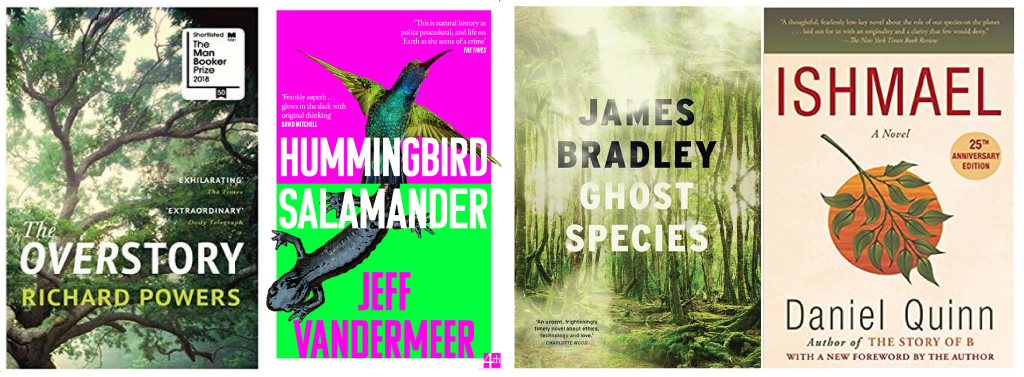
    The following titles are highly recommended as a starting point for senior secondary and adult readers.

    Ishmael by Daniel Quinn

    Hummingbird, Salamander by John Vandermeer

    Ghost Species by James Bradley.

    The Overstory by Richard Powers.

    See also:
    Read4Life Goodreads Ecofiction or visit Goodreads’ Eco-Fiction links


    [1] I have used this spelling of Eco-fiction to mirror that used by John Stadler in his anthology of the same name containing a selection of short stories including: A sound of thunder by R. Bradbury, The turtle by J. Steinbeck. The conversation of Eiros and Charmion by E.A. Poe, The fair young willowy tree by A.E. Coppard, A mother’s tale, by J. Agee, The law by R.M. Coates, The birds by D. du Maurier, A stay at the ocean by R. Wilson, Jr., The supremacy of Uruguay by E.B. White, Look how the fish live by J.F. Powers, Tomorrow and tomorrow and tomorrow by K. Vonnegut, Jr., The white heron by S.O. Jewett, The Mary Celeste move by F. Herbert, The toys of peace by Saki (H.H. Munro), The subliminal man by J.G. Ballard, It’s such a beautiful day by I. Asimov, The hummingbird that lived through winter by W. Saroyan.

    [2] Jim Dwyer. Where the Wild Books Are : A Field Guide to Ecofiction. University of Nevada Press, 2010.

    [3] Ecocide has not been accepted as an internationally punishable crime by the United Nations.  The only international recognition of ecocide is in the Rome Statute as a war crime where it is a crime to “Intentionally launch an attack in the knowledge that such attack will cause incidental loss of life or injury to civilians or damage to civilian objects or widespread, long-term and severe damage to the natural environment which would be clearly excessive in relation to the concrete and direct overall military advantage anticipated”.

    Despite repeated attempts to recognise ecocide as a threat to peace, in particular by Scottish Lawyer Polly Higgins in 2010 and more recently by Vanuatu and the Maldives in 2019, ecocide is not a crime in peacetime. Ecocide can be defined as “The extensive damage to, destruction of or loss of ecosystems of a given territory, whether by human agency or by any other causes, to such an extent that peaceful enjoyment by the inhabitants of that territory has been severely diminished”. This definition includes damage caused by individuals, corporations and/or the State. https://en.wikipedia.org/wiki/Ecocide

    [4] Munteanu, Nina. “Ten Eco-Fiction Novels Worth Discussing.” Tor.com, 10 Nov. 2020, http://www.tor.com/2020/11/10/ten-eco-fiction-novels-worth-discussing/. Accessed 16 June 2022.

    [5] Schneider-Mayerson, Matthew. “The Influence of Climate FictionAn Empirical Survey of Readers.” Environmental Humanities, vol. 10, no. 2, 2018, pp. 473–500, read.dukeupress.edu/environmental-humanities/article/10/2/473/136689/The-Influence-of-Climate-FictionAn-Empirical, 10.1215/22011919-7156848.

    [6] Lindgren Leavenworth, Maria, and Annika Manni. “Climate Fiction and Young Learners’ Thoughts—a Dialogue between Literature and Education.” Environmental Education Research, vol. 27, no. 5, 7 Dec. 2020, pp. 727–742, 10.1080/13504622.2020.1856345. Accessed 6 Nov. 2021.

    [7] In both studies the potential for stimulating discussions was noted and suggested for further study.

    [8] (Lindgren Leavenworth and Manni)

    [9]Bertagna, Julie. Zenith. London, Macmillan, 2011.p 207

    [10] (Lindgren Leavenworth and Manni)

    [11] Adult readers in the study reported feeling “inspired”, “motivated” and forced to “reignite concerns they had let go idle” but also “angry”, “incredibly sad”, “helpless” and “guilty”. Many reported a realisation that climate change was a “slow moving violence” that also encompassed widespread social, cultural and political repercussions.

    [12] (Lindgren Leavenworth and Manni)

  • Literacy Links to Wellbeing

    Literacy Links to Wellbeing

    Reading Fiction can Influence Wellbeing Literacy.

    A team at Melbourne University is proposing a Capability Model for Wellbeing Literacy. This model attributes an agency, intention and freedom of choice (a capability) to enhance and maintain the wellbeing of ourselves, others and the wider world, made possible by way of multimodal forms of language. The team’s 2021 paper entitled “Wellbeing Literacy: A Capability Model for Wellbeing Science and Practice” (Oades et al. 2021) adds further weight to the assertion that reading enhances wellbeing.

    The Melbourne University team defines wellbeing literacy as the “capability to comprehend and compose wellbeing language, (across contexts) with the intention of using such language to maintain or improve the wellbeing of oneself, others or the world”.

    The article refers to language as a “resource that people use actively to construct their psychological and social realities”. Wellbeing literacy relies on being able to recognise and interpret the language of wellbeing. But as our capacity to use language expands, so does our capacity to recognise, interpret and articulate our wellbeing insights and experiences. Not only do we become agents in our own wellbeing, but we are able to make conscious choices that influence our own wellbeing and that of others, and we recognise that our state of wellbeing is a personal choice and we have the freedom to make those choices.

    According to the Capability Model, language provides people with the capability to convert wellbeing opportunities into wellbeing experiences and achievements. This article also recognises that with more language opportunities comes more choices, greater freedom of choice and a broader interpretation of concept of wellbeing. Language can also reframe experiences to enhance wellbeing – an aspect of the written word as well known to poets as it is to journalists.

    It is easy to see how reading supports this model: as protagonists use language to support their own wellbeing and demonstrate agency in their own choices we might start to recognise and realise our own values, agency and potential. Through the narrative we are able to find insights into our wellbeing experiences and achievements.

    In the Capability Model wellbeing literacy becomes a recognisable aspect of Developmental Bibliotherapy, both dynamic and very personal, and closely connected to agency and the “freedom to choose what wellbeing means to a person and [the] choice in how that is maximised via language and knowledge.”

    Ultimately, maintaining our wellbeing is a personal endeavour, related to our goals, values, relationships and past experiences. However, as language expands our capability of experiencing wellbeing, fiction provides language in context and offers a myriad of opportunities to learn the language of wellbeing and the freedom to discover, trial and explore our own unique versions of wellbeing.

    Bibliography
    Oades, Lindsay G., Aaron Jarden, Hanchao Hou, Corina Ozturk, Paige Williams, Gavin R. Slemp, and Lanxi Huang. 2021. “Wellbeing Literacy: A Capability Model for Wellbeing Science and Practice.” International Journal of Environmental Research and Public Health 18 (2): 719. https://doi.org/10.3390/ijerph18020719.

  • READ4LIFE Podcasts

    READ4LIFE Podcasts

    Listen to Developmental Bibliotherapy as a podcast…

    Or Listen on Spotify

    Developmental Bibliotherapy: A Quick Introduction
    Cli-Fi: Reframing Young People’s Responses
    to Climate Change
    Chance and the Prepared Mind

    Photos by Juja Han and Nick Fewings on Unsplash

  • Developmental Bibliotherapy on Prezi

    Developmental Bibliotherapy on Prezi

    • What is Developmental Bibliotherapy?
    • How do Stories nurture wellbeing in teens?
    • How does Cli-Fi address Eco-Anxiety?

    Click here for prezi


  • Humanities On The Brink UCSB 2020

    Humanities On The Brink UCSB 2020

    Association for the Study of
    Literature and Environment (ASLE)
    2020 VIRTUAL SYMPOSIUM
    University of California, Santa Barbara, July 2020.

    HUMANITIES ON THE BRINK: ENERGY, ENVIRONMENT, EMERGENCY

    Cli-Fi Thumbnail

    View my Presentation on Youtube

    Further reading and Bibliography:

    Abbott, J., Sanson, A., Turner, C., & Radermacher, H. (2019). Young people and the climate crisis | APS. InPsych41(6). https://www.psychology.org.au/for-members/publications/inpsych/2019/december/Young-people-and-the-climate-crisis

    Armstrong, A. K., Krasny, M. E., & Schuldt, J. P. (2018). Communicating climate change : a guide for educators. Comstock Publishing Associates, An Imprint Of Cornell University Press.

    Callison, C. (2015). How climate change comes to matter : the communal life of facts. Duke University Press.

    Filatoff, N. (2020, February 10). The psychology of climate-change denial – we’re all on the spectrum. Pv Magazine International. https://www.pv-magazine.com/2020/02/10/the-psychology-of-climate-change-denial-were-all-on-the-spectrum/

    Gifford, R. (2010, December). Understanding the psychological barriers to climate change action | APS. Www.Psychology.Org.Au. https://www.psychology.org.au/publications/inpsych/2010/december/climate

    Gorman, S. (2019, January). Climate Change Denial. Psychology Today. https://www.psychologytoday.com/au/blog/denying-the-grave/201901/climate-change-denial

    Hall, D. (2019a). Internal Reasons and the Problem of Climate Change. Theoria66(160), 27–52. https://doi.org/10.3167/th.2019.6616003

    Hall, D. (2019b, October 8). Climate explained: why some people still think climate change isn’t real. The Conversation. https://theconversation.com/climate-explained-why-some-people-still-think-climate-change-isnt-real-124763

    Haydn Washington, & Cook, J. (2011). Climate change denial : heads in the sand. Earthscan.

    Hayes, K., Blashki, G., Wiseman, J., Burke, S., & Reifels, L. (2018). Climate change and mental health: risks, impacts and priority actions. International Journal of Mental Health Systems12(1). https://doi.org/10.1186/s13033-018-0210-6

    Hornsey, M. J., Harris, E. A., Bain, P. G., & Fielding, K. S. (2016). Meta-analyses of the determinants and outcomes of belief in climate change. Nature Climate Change6(6), 622–626. https://doi.org/10.1038/nclimate2943

    Lopes, L., Muñana, C., & 2019. (2019, September 16). The Kaiser Family Foundation/Washington Post Climate Change Survey – Main Findings – 9349. KFF. https://www.kff.org/report-section/the-kaiser-family-foundation-washington-post-climate-change-survey-main-findings/

    O’Brien, K., Selboe, E., & Hayward, B. M. (2018). Exploring youth activism on climate change:  dutiful, disruptive, and dangerous dissent. Ecology and Society23(3). https://doi.org/10.5751/es-10287-230342

    Robson, D. (2019, June 30). The science of influencing people: six ways to win an argument. The Guardian; The Guardian. https://www.theguardian.com/science/2019/jun/30/the-science-of-influencing-people-six-ways-to-win-an-argument

    Sample, P. by I., & Sanderson, produced by M. (2017, January 19). Communicating climate change: a psychoanalysis – Science Weekly podcast. The Guardian. https://www.theguardian.com/science/audio/2017/jan/19/communicating-climate-change-a-psychoanalysis-science-weekly-podcast

    Stevenson, K., & Peterson, N. (2015). Motivating Action through Fostering Climate Change Hope and Concern and Avoiding Despair among Adolescents. Sustainability8(1), 6. https://doi.org/10.3390/su8010006

    Swim, J., Clayton, S., Doherty, T., Gifford, R., Howard, G., Reser, J., Stern, P., & Weber, E. (2010). Psychology and Global Climate Change: Addressing a Multi-faceted Phenomenon and Set of Challenges A Report by the American Psychological Association’s Task Force on the Interface Between Psychology and Global Climate Change Members. https://www.apa.org/science/about/publications/climate-change.pdf

    Van Boven, L., Ehret, P. J., & Sherman, D. K. (2018). Psychological Barriers to Bipartisan Public Support for Climate Policy. Perspectives on Psychological Science13(4), 492–507. https://doi.org/10.1177/1745691617748966


  • Reading and the Default Mode Network

    Reading and the Default Mode Network

    We read books to find out who we are.”
    — Ursula Le Guin in The Language of the Night, 1979.

    Image by John Hain from Pixabay

    What is the Default Mode Network?

    The Default Mode Network (DMN) is that part of the brain most active during REM sleep, while daydreaming and while reading stories.

    The DMN is associated with task-unrelated thinking, sometimes called Spontaneous or Stimulus-Independent thought, and has been described as “The brain running in neutral” activated “precisely when we detach ourselves from what’s going on around us” (Noë, 2017).

    “Spontaneous thought allows individuals to construct and simulate alternative scenarios, mentally-organize their plans, and prepare for what may lie ahead … and facilitate the organization and structuring of daily events.” (Andrews-Hanna, 2011 )

    The Sentinel

    But, while the DMN can be thought of as the parts of the brain that are not engaged with processing sensory information or attending to external stimuli (one reason why the study of DMN is difficult), research also supports a “sentinel hypothesis” in which the DMN concurrently monitors the external environment for upcoming stimuli or other significant, unpredictable events; precisely the situation in which we respond to an unexpected event “without thinking” – far from being in a “world of our own” our DMN has been monitoring our external world and is already engaged sufficiently with our memories to react instantaneously.

    Eudaimonia, Wellbeing and Pleasure

    The findings that the DMN is activated when we are directing our attention inwards may be the reason that the DMN has been linked with the development of Eudaimonia, described by Aristotle as ‘doing and living well’. Vessel (2019) also linked the DMN to the perception of beauty related to aesthetics, including an inner feeling of pleasure associated with music, artworks, landscapes and architecture, perhaps because these activities are often linked with pleasant memories. It is not surprising then to learn that many of the key regions of the pleasure system are part of the Default Mode Network.

    Defining Ourselves

    The DMN is in a constant performance/feedback/revision loop as it continually stores, reviews and applies learned information, consolidating our recent experiences, and enabling us to make sense of the chaotic and disconnected events that we encounter daily.

    Our DMN is active whenever we are thinking about ourselves or others, when we are remembering the past or using our past experiences to plan for the future, when we are interacting in social contexts and finding our place in the world, and when we are using our self knowledge to make choices, explore our creativity and test our boundaries.

    DMN is Responsible for:

    All the processes that make us who we are as individuals and as members of the society we inhabit…

    FORMING Personal Narratives and Autobiographical Memories –

    Understanding and accepting our emotional responses, and assimilating facts and events about ourselves into our understanding and knowledge of our personal traits, and our strengths and weaknesses.

    DEVELOPING Theory of Mind –

    Understanding diversity in viewpoints and opinions, developing Empathy and Moral Reasoning, learning to interpret Social cues and examine Stereotypes, and then learning to modify our behaviour to suit different social situations 

    Managing Memories –

    Creating memories and then enabling us to recall and apply these memories, access intrinsic understanding, imagine possible futures, comprehend narratives, and respond without thinking in unexpected situations.  

    APPLYING Insight & Intuition –

    Responsible for the Aha moments, lateral thinking, creativity and confidence in problem solving, Spontaneous Thought and automatic responses that protect us in Sentinel mode, and

    DEVELOPING a Growth Mindset through Vicarious Learning –

    Building efficacy, hope, optimism, emotional resilience and curiosity, interpreting simulations & making predictions, finding pathways, overcoming obstacles, through the actions of others

    HELPING to Making Sense of the World –

    Assimilating and interpreting narratives, creating order from chaos, identifying patterns and logical thought processes, analysing and synthesising the day’s events.

    Stories and the Default Mode Network

    When we read, our DMN is helping us imagine journeys with heroes and villians, define our values and our goals, helping us visualize different perspectives and pathways, supporting our capacity to simulate hypothetical scenes, spaces and mental states; we must access our memories in order to understand the story we’re reading and visualise the scenes within the novel. Our DMN is active when we respond to the word ‘Dog’, associating that one word with the memories and emotions linked to a multitude of interactions with dogs, all invoked by the present instance of a dog within the pages of a novel.

    It is the correlation between Reading Fiction and the activation of the Default Mode Network, with its positive links to eudaimonic states and wellbeing, aesthetics, social responsibility, and the self awareness that necessitates the welfare of the self in future endeavours, that presents the most compelling case for Developmental Bibliotherapy in schools.

    References

    Andrews-Hanna, J. R. (2011). The Brain’s Default Network and Its Adaptive Role in Internal Mentation. The Neuroscientist18(3), 251–270. https://doi.org/10.1177/1073858411403316

    Noë, A. (2016, June 17). Why Do Our Minds Wander? Npr.Org; NPR. https://www.npr.org/sections/13.7/2016/06/17/481977405/why-do-our-minds-wander

    Stark, E. A., Vuust, P., & Kringelbach, M. L. (2018, January 1). Chapter 7 – Music, dance, and other art forms: New insights into the links between hedonia (pleasure) and eudaimonia (well-being) (J. F. Christensen & A. Gomila (eds.)). ScienceDirect; Elsevier. https://www.sciencedirect.com/science/article/pii/S0079612318300190

    Vessel, E. A., Isik, A. I., Belfi, A. M., Stahl, J. L., & Starr, G. G. (2019). The default-mode network represents aesthetic appeal that generalizes across visual domains. Proceedings of the National Academy of Sciences116(38), 19155–19164. https://doi.org/10.1073/pnas.1902650116

    Wikipedia Contributors. (2019, May 15). Default mode network. Wikipedia; Wikimedia Foundation. https://en.wikipedia.org/wiki/Default_mode_network